

Alcohol use among teens and young adults in Morristown often develops quietly. Early signs can be easy to miss when drinking is normalized through social gatherings, stress relief, or peer influence. For many families throughout Morris County, subtle changes in behavior, mood, or routine may appear long before alcohol use becomes obvious or disruptive.
According to the Centers for Disease Control and Prevention, alcohol use is a leading contributor to preventable injury, mental health strain, and long-term health conditions across the United States.
Public health data consistently shows that alcohol remains one of the most common substance-related concerns across New Jersey communities. Recognizing early warning signs allows families to respond with clarity rather than urgency, reducing the likelihood of escalation and long-term harm. This article outlines what families should watch for, how to approach conversations calmly, and when professional guidance may help.
Signs of Alcohol Abuse in Morristown, New Jersey
Alcohol misuse rarely begins with dramatic or obvious events. In most cases, early indicators appear as patterns that develop gradually
across school performance, emotional regulation, relationships, and daily routines. Families who understand how alcohol affects stress response, sleep quality, and decision-making are better positioned to recognize these patterns early.
Alcohol use exists on a spectrum. Occasional experimentation does not automatically indicate a problem, but repeated binge drinking, loss of control, or continued use despite consequences can signal increasing risk. Education on the early signs of alcohol addiction helps families distinguish between isolated events and emerging patterns that deserve attention.
Understanding the Spectrum of Alcohol Use in Adolescents and Young Adults
Alcohol use develops along a spectrum rather than appearing suddenly as a crisis. For families in Morristown and throughout Morris County, understanding where behavior falls on this spectrum helps reduce confusion and overreaction while still protecting safety.
Early experimentation may involve infrequent drinking in social settings without immediate disruption to school, work, or relationships. Risk increases when alcohol use becomes patterned, such as drinking to manage stress, drinking in isolation, or repeated binge episodes despite clear expectations or consequences. At the clinical end of the spectrum, alcohol use begins to interfere with emotional regulation, judgment, health, or daily functioning.
The challenge for families is that early and moderate risk often looks subtle. Academic performance may remain strong. Social engagement may continue. These outward signs can delay recognition even as alcohol begins shaping coping patterns. Recognizing alcohol use as a progression rather than a single event allows families to intervene earlier, when guidance and structure are most effective.
Why Early Alcohol Use Often Goes Unnoticed
In Morristown and surrounding Morris County communities, alcohol use may blend into everyday life. Social acceptance, academic pressure, and shifting peer dynamics can mask early warning signs. Weekend-only drinking, private settings such as basements or cars, and fear of consequences often delay detection.
County-level public health reporting shows that alcohol-related incidents frequently escalate quietly before families recognize a problem. Early misuse often hides behind continued academic performance, social engagement, or athletic participation. Public health agencies emphasize that these early phases are the most effective time for awareness and intervention.
Behavioral Warning Signs Families Should Notice
Understanding these age-related patterns helps families contextualize changes rather than dismissing them as typical developmental behavior.
How Behavioral Warning Signs Can Look at Different Ages
Behavioral changes linked to alcohol use often vary by developmental stage, which can make early recognition difficult. Families benefit from understanding how risk may present differently depending on age and environment.
Among middle school–aged youth, warning signs may include increased irritability, secrecy around friendships, sudden resistance to supervision, or changes in sleep patterns. At this stage, alcohol exposure often occurs through peers or older siblings and may be experimental but still significant.
In high school students, warning signs frequently include shifts in peer groups, increased weekend isolation or unaccounted time, declining motivation, or emotional volatility. Alcohol may begin to play a role in stress management related to academics, athletics, or social pressure.
For college-aged young adults or those living at home after graduation, warning signs may include withdrawal from family routines, inconsistent schedules, financial strain, or increased defensiveness around independence. Alcohol use may appear normalized due to age while still contributing to emerging mental health or behavioral concerns.
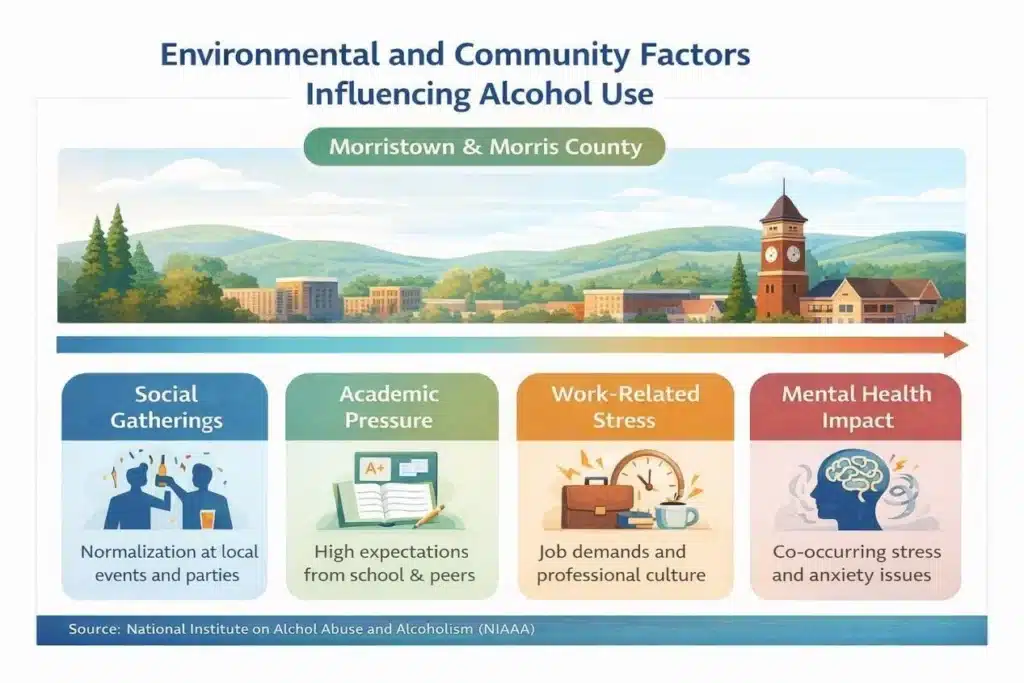
Behavioral changes are often the earliest indicators of alcohol-related concern. Instead of looking for a single defining moment, families benefit from noticing clusters of changes that persist over time.
Common behavioral warning signs include declining grades or work performance, withdrawal from sports or hobbies, mood swings or increased anxiety, changes in sleep patterns such as staying up late or sleeping through the day, and increased secrecy about whereabouts or social plans. Sudden defensiveness or shifts in peer groups may also appear.
These changes do not confirm a diagnosis. They represent an opportunity for observation, conversation, and support before risks escalate.
Physical and Environmental Signs of Alcohol Use
Physical signs may appear inconsistently in early stages, especially when drinking occurs episodically. Environmental clues often provide clearer context because they leave observable evidence.
Families may notice the smell of alcohol on breath or clothing, bloodshot eyes, frequent headaches, nausea, or unexplained fatigue. Excessive use of gum, mouthwash, or perfume to mask scent can also be a sign. Environmental indicators include empty containers, bottle caps, concealed alcohol in bedrooms or vehicles, or unusual trash patterns.
Why Alcohol Risk Can Look Different in Morris County
Because alcohol use may coexist with strong academic or career performance, families may overlook early warning signs. This normalization contributes to delayed conversations and later-stage intervention. Understanding these local dynamics allows families to view alcohol-related concerns as part of a broader community pattern rather than an isolated failure or moral issue.
Alcohol risk is shaped by local environment, access, and community norms. In Morris County, alcohol remains one of the most frequently cited substances involved in emergency department visits, injury-related incidents, and behavioral health referrals, according to New Jersey Department of Health reporting.
Local Social Norms and Access Patterns That Influence Alcohol Risk
Alcohol-related risk is shaped by community environment as much as individual behavior. In Morris County, access to alcohol, social norms, and performance expectations intersect in ways that can delay recognition.
Social gatherings, private residences, and peer networks often provide easy access to alcohol without public visibility. High academic expectations, competitive extracurricular schedules, and professional stress can reinforce alcohol as an acceptable coping mechanism rather than a concern.
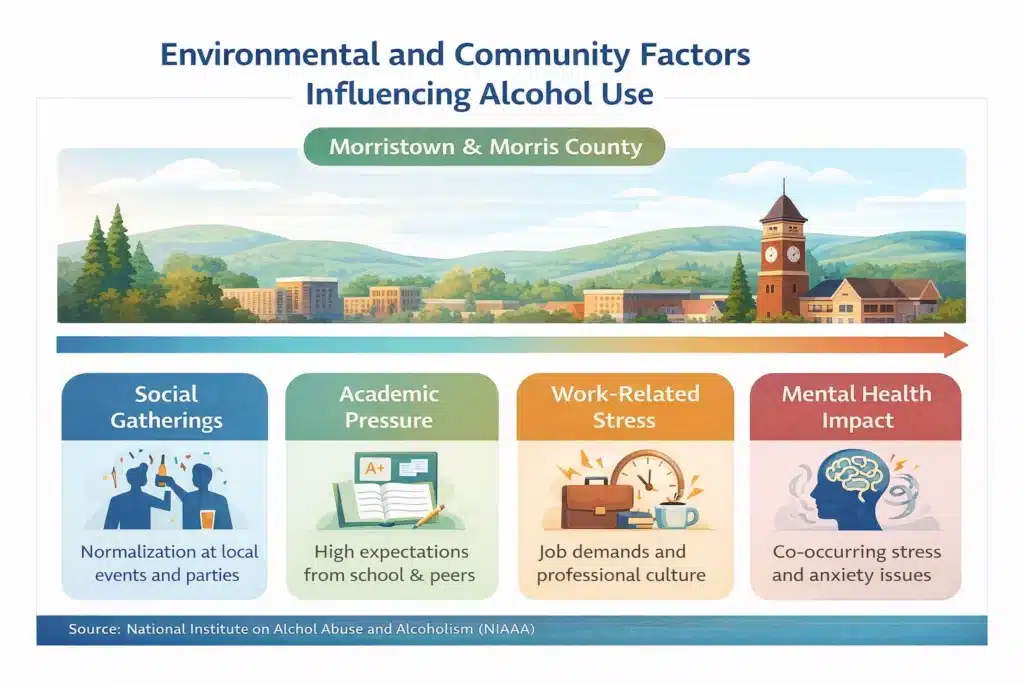
County-level data consistently show alcohol contributing to impaired driving incidents, mental health crises, and preventable injuries. Morris County mirrors statewide trends, particularly among adolescents, young adults, and working professionals.
Local factors also influence concealment and normalization. High academic expectations, competitive extracurricular environments, and professional stress can position alcohol as a socially acceptable coping tool. Understanding these dynamics helps families recognize that alcohol-related concerns reflect broader community patterns rather than isolated personal failures.
How Families Can Respond Without Escalating Conflict
Helpful approaches include describing specific observations instead of assumptions, asking open-ended questions, emphasizing safety and care, and avoiding ultimatums during early conversations. Planning the discussion for a neutral time and keeping it focused helps preserve trust.
A Practical Framework for Early Family Conversations
Early conversations are most effective when they focus on observation, safety, and clarity rather than accusation. Families often benefit from using a structured approach.
The first step involves observing patterns over time rather than reacting to isolated events. Documenting specific behaviors helps conversations remain grounded in facts rather than emotion. Choosing a calm, neutral moment increases the likelihood of productive dialogue.
Open-ended questions encourage communication without defensiveness. Framing concerns around health, well-being, and safety reinforces care rather than control. When boundaries are necessary, clear expectations paired with consistency help maintain trust.
This structured approach supports early engagement while preserving relationships and reducing escalation.
Many families delay conversations out of fear that discussion will lead to denial or conflict. Evidence-based guidance emphasizes calm, behavior-focused conversations rather than labels or accusations.
When Alcohol Use Becomes a Medical or Clinical Concern
Some signs indicate alcohol use has moved beyond experimentation. Persistent tolerance, withdrawal symptoms, or continued use despite clear consequences suggest medical or clinical risk.
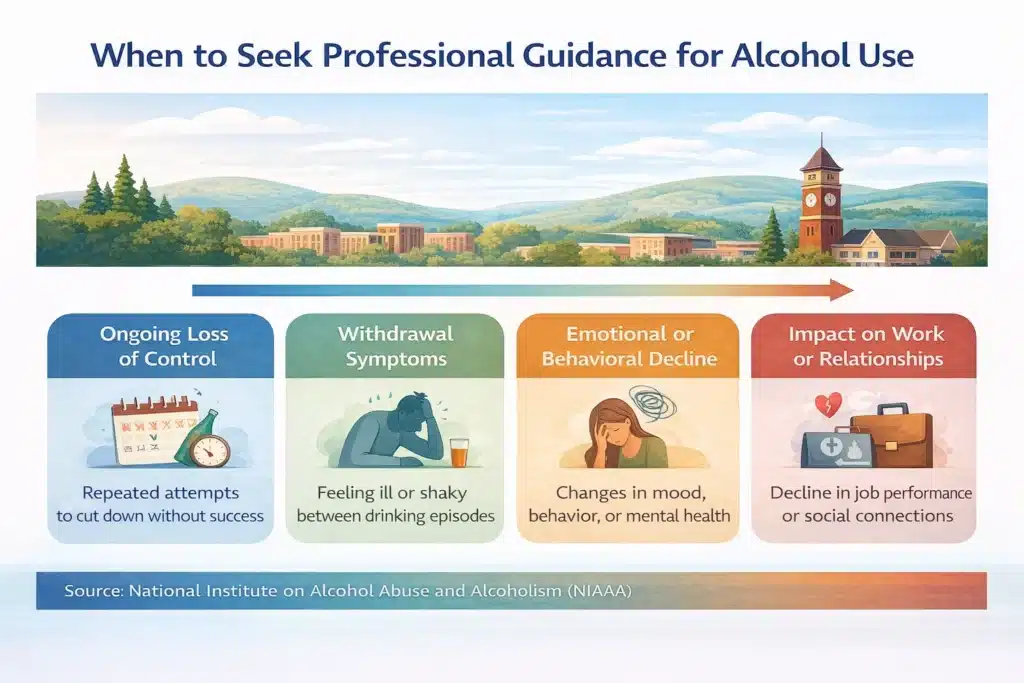
In New Jersey, alcohol is consistently identified as a leading contributor to substance-related hospital visits. Withdrawal symptoms can be medically serious and should be evaluated by professionals rather than managed at home when risk factors are present. Early clinical assessment reduces the likelihood of emergency intervention.
When to Seek Professional Guidance
Professional guidance is most useful when uncertainty is high and patterns persist. A clinical evaluation provides clarity around severity, safety considerations, and next steps without committing families to treatment.
Assessments focus on placement and risk, helping families understand whether outpatient counseling, structured support, or medical monitoring is appropriate, including options such as outpatient alcohol treatment in New Jersey.
What a Clinical Alcohol Assessment Typically Evaluates in New Jersey
A clinical alcohol assessment provides families with clarity rather than commitment. In New Jersey, assessments evaluate patterns of use, risk factors, mental health considerations, and safety concerns.
Professionals assess frequency, quantity, behavioral impact, stress response, and any physical symptoms related to alcohol use. The goal is to determine the level of risk and appropriate next steps, which may range from monitoring and education to outpatient counseling or medical oversight.
For families, an assessment offers objective guidance at a time when uncertainty is common. Early evaluation often prevents escalation and reduces the likelihood of crisis-driven decisions later.
Local Resources and Next Steps for Families in Morris County
Families benefit from understanding local pathways before urgency sets in. Common entry points include primary care providers, school counselors, licensed substance use assessments, and community-based treatment options when indicated.
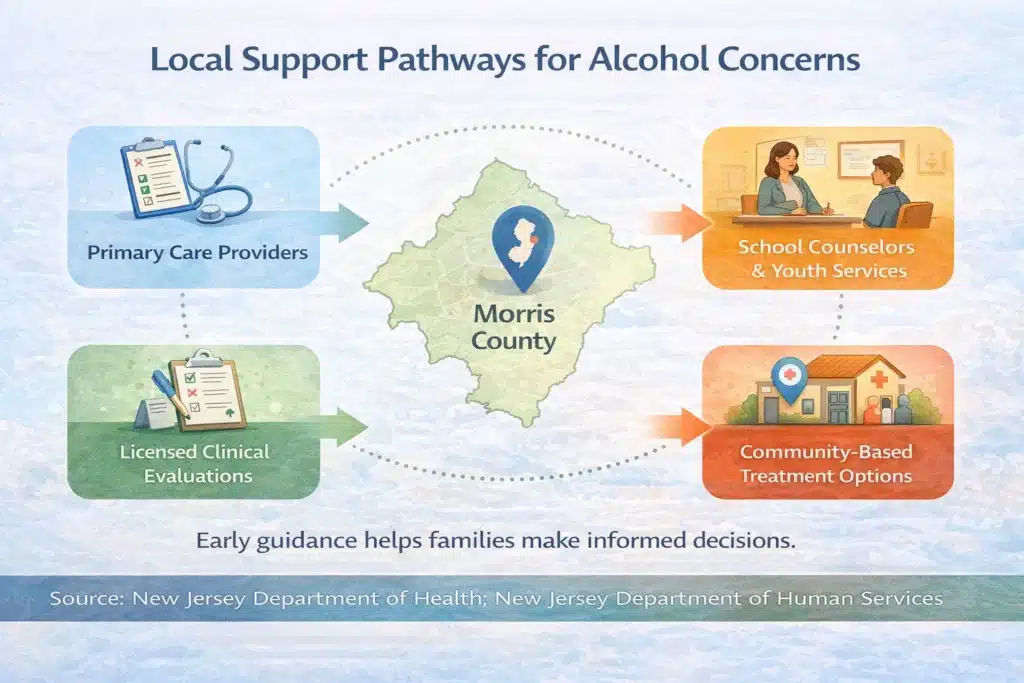
State and county public health agencies encourage early education and evaluation, reinforcing that proactive guidance improves outcomes. Research from the National Institute on Alcohol Abuse and Alcoholism highlights that early patterns of alcohol use often develop without immediate consequences, making early recognition and education especially important.
Final Thoughts for Families in Morristown and Morris County
Alcohol-related concerns often emerge gradually. Early awareness, calm communication, and access to accurate information help families respond with confidence rather than urgency. Understanding local data, community context, and professional guidance supports informed decision-making that prioritizes safety, health, and long-term well-being.
Frequently Asked Questions
How Can Families Tell if Alcohol Use is Becoming a Problem?
When behavioral, physical, or emotional changes persist and interfere with daily functioning, professional guidance can help clarify risk.
When Should Families Seek Professional Help?
When alcohol use affects health, relationships, academic performance, or emotional stability.
Does Evaluation Mean Committing to Treatment?
No. Evaluation provides information and guidance without obligation.
Are Alcohol Concerns Common in New Jersey?
Yes. Alcohol remains one of the most common substance-related concerns statewide, including Morris County.