

When someone is ready to begin addiction treatment, one of the first choices is deciding between inpatient and outpatient rehab. These two options offer different levels of structure, intensity, and support, and each plays a specific role depending on the person’s needs and environment. Research on different levels of addiction treatment shows that care is most effective when it is matched to a person’s clinical needs and daily stability.
Inpatient care offers full-time support in a residential setting, while outpatient programs allow people to live at home and attend scheduled sessions during the week. Both are commonly used throughout New Jersey, where state-regulated addiction treatment programs in New Jersey operate under licensing and oversight standards designed to ensure quality of care and accountability.
The decision often depends on factors like daily stability, mental health needs, past treatment history, and the level of accountability someone needs to stay on track. This guide breaks down what each option looks like, how they compare, and what to consider when choosing between them.

What Inpatient Rehab in New Jersey Involves
Inpatient rehab means staying at a treatment center full-time, with support available day and night. It’s often the best option for people dealing with long-term addiction, repeated relapses, or symptoms that make daily life hard to manage. These programs give people a chance to step away from outside stress and focus fully on recovery.
Treatment includes a set daily routine with therapy, medical support, group sessions, and time to rest and reset. The structure helps take pressure off while building better habits that last. Many programs also include help with mental health issues like depression or anxiety, which often show up alongside substance use.
Inpatient drug rehab in New Jersey provides this type of full-time care, offering a clear path for people who need stability and round-the-clock support before returning home or stepping into outpatient services.
How Outpatient Rehab Works in New Jersey
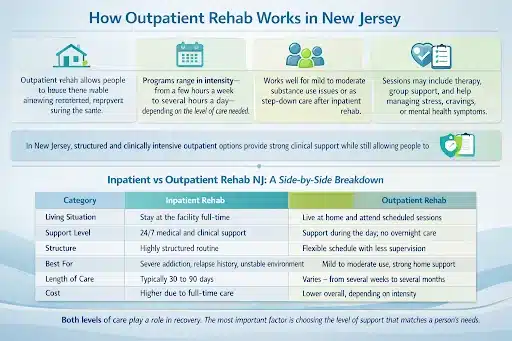
Outpatient rehab allows people to live at home while attending scheduled treatment sessions during the week. These programs range in intensity, from a few hours a week to several hours a day, depending on the level of care someone needs. Outpatient treatment can work well for people with mild to moderate substance use issues or those stepping down after inpatient care.
Sessions often include therapy, group support, and help managing stress, cravings, or mental health symptoms. Since the person remains in their usual environment, outpatient care also provides an opportunity to apply what’s learned in real time. In New Jersey, programs like structured, clinically intensive care options are available for those who need more support than standard outpatient treatment can offer. These services provide a middle ground, with a strong clinical structure while still allowing people to return home at the end of the day.
Inpatient vs Outpatient Rehab NJ: A Side-by-Side Breakdown
When deciding between inpatient and outpatient rehab in NJ, it helps to compare the two options across key areas. Each one offers different benefits depending on the level of care someone needs, their home environment, and how stable things feel day to day.
| Category | Inpatient Rehab | Outpatient Rehab |
| Living Situation | Stay at the facility full-time | Live at home and attend scheduled sessions |
| Support Level | 24/7 medical and clinical support | Support during the day; no overnight care |
| Structure | Highly structured routine | Flexible schedule with less supervision |
| Best For | Severe addiction, relapse history, unstable environment | Mild to moderate use, strong home support |
| Length of Care | Typically 30 to 90 days | Varies — from several weeks to several months |
| Cost | Higher due to full-time care | Lower overall, depending on intensity |
Both levels of care play a role in recovery. What matters most is finding the one that matches where someone is in the process and what kind of support they need to move forward.
When Inpatient Rehab Is the Right Choice
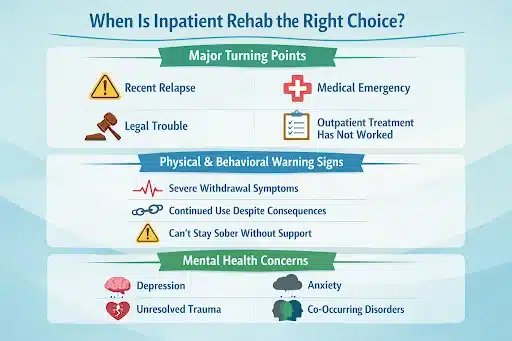
Inpatient rehab is often the right call when substance use starts affecting daily life in serious ways. For many people, this decision follows a turning point such as a relapse, a medical emergency, or legal trouble. It is also a common next step when outpatient care has not been enough to stay on track.
Other signs that inpatient treatment may be needed include strong withdrawal symptoms, ongoing substance use despite major consequences, or untreated mental health issues like depression, anxiety, or trauma. These situations usually call for more structure and support than outpatient programs can provide.
This level of care creates space to get stable, reset routines, and stay focused without outside distractions. It often becomes the first real step forward when other attempts haven’t worked.
When Outpatient Rehab May Be Enough
Outpatient rehab can be a good fit for people with a stable day-to-day life who don’t need 24-hour support. These programs are often used at the start of treatment for mild to moderate substance use, or after inpatient care as a way to keep building progress.
Someone who can manage basic responsibilities, has a safe home environment, and is motivated to stick with treatment may do well in an outpatient setting. The flexibility allows for work, school, or family care while still getting regular support through therapy, group sessions, and clinical check-ins.
Programs often include group-based support options and personalized care plans that help people stay engaged without disrupting their responsibilities at home or work.
Research on structured outpatient behavioral health services shows that consistent scheduling, qualified providers, and coordinated care improve outcomes. Structured outpatient treatment can be effective when it includes consistent scheduling, qualified providers, and clear coordination between services.

Long-Term Recovery: Why Structure Matters
Staying on track after treatment ends can be one of the hardest parts of recovery. For many people, long-term success depends on having structure, support, and clear routines in place. These tools help reduce stress, prevent relapse, and give recovery a stronger foundation to grow.
In both inpatient and outpatient settings, programs that build daily structure and encourage follow-through tend to see better results. Regular group sessions, goal tracking, and peer accountability help maintain focus, especially in the first few months after treatment.
Ongoing support after formal care is also important. People who stay connected through outpatient check-ins, community groups, or follow-up counseling often experience more stable progress. Recovery does not stop when treatment ends. It moves into a different phase that still benefits from routine and consistent support.
Structure creates stability, removes guesswork, and helps people focus on what matters each day. That kind of consistency makes long-term change more sustainable.
Choosing a Program: What to Consider
The decision between inpatient and outpatient rehab depends on a person’s current situation, level of risk, and ability to stay consistent with treatment. Factors like the severity of substance use, past relapses, and any underlying mental health concerns should all be considered.
Support at home plays a key role. If someone is dealing with frequent triggers, instability, or a lack of support, inpatient care may provide the structure and distance needed to get on track. Outpatient care may work well when home life is steady, and there’s motivation to stick with a weekly schedule.
Daily responsibilities, such as work, parenting, and financial constraints, can also shape the decision. Starting with the right level of care gives people a better chance to build momentum early in the process.
An admissions process helps match individuals to programs that fit their needs, using screening tools, risk assessments, and personal histories to guide placement. This individualized approach ensures that the level of care aligns with both immediate safety concerns and long-term recovery goals.
Conclusion: Matching the Right Level of Rehab to the Person
Choosing between inpatient and outpatient rehab is one of the most important steps in starting recovery. Each option supports different needs depending on the person’s environment, level of risk, and ability to manage daily life during treatment.
Some people need full-time support to stabilize and get distance from outside stress. Others do well in outpatient care when there’s enough structure and support at home. What matters most is making a decision based on current needs, not future goals or outside pressure.
A clear starting point helps build momentum. The right level of care gives people the space to focus, stay engaged, and begin moving toward long-term recovery with the right support.
Frequently Asked Questions About Inpatient vs Outpatient Rehab in New Jersey
How Do I Know if I Need Inpatient or Outpatient Rehab?
A clinical assessment is the best way to determine the right fit. Inpatient rehab is usually recommended for people with a history of relapse, unstable living conditions, or mental health symptoms that make daily life harder to manage. Outpatient care may be appropriate for those with a safe home environment and enough stability to manage treatment while living at home.
Is Outpatient Rehab Enough for Long-Term Recovery?
Yes, for many people. Outpatient programs work well when there’s structure, consistency, and support in place. It’s also common to start with inpatient care and then step down to outpatient as progress continues.
Can I Still Work or Take Care of Family During Outpatient Rehab?
Yes. Outpatient rehab is designed to fit around daily responsibilities. The schedule is flexible and allows people to keep up with work, school, or caregiving while receiving treatment.
Does Insurance Cover Both Inpatient and Outpatient Rehab in New Jersey?
Most insurance plans cover both levels of care, but the amount and length of coverage can vary. It’s best to check with the provider or treatment center directly to understand what’s included.