

Regional trends in inpatient addiction services in New Jersey reflect a growing recognition of how gender influences substance use and treatment engagement. In Morris County, Newark, and across the state, men often enter care at more acute stages. Delays are frequently linked to stigma, emotional suppression, and concerns about privacy or professional consequences.
This pattern is supported by research. A recent study on gender differences in substance use disorders found that men are significantly more likely than women to meet lifetime criteria for substance use disorder. The same data shows that men often access care later, increasing clinical complexity at the time of admission. These findings reinforce the need for early, gender-informed treatment access.
Rolling Hills Recovery Center provides men’s addiction treatment NJ residents can rely on through rehab programs based in Chester. Services include trauma-focused therapy, structured peer support, and therapeutic models that reflect how men process shame, identity, and long-term behavior change. Learn more about Rolling Hills Recovery’s New Jersey programs for additional details on treatment structure and outcomes.
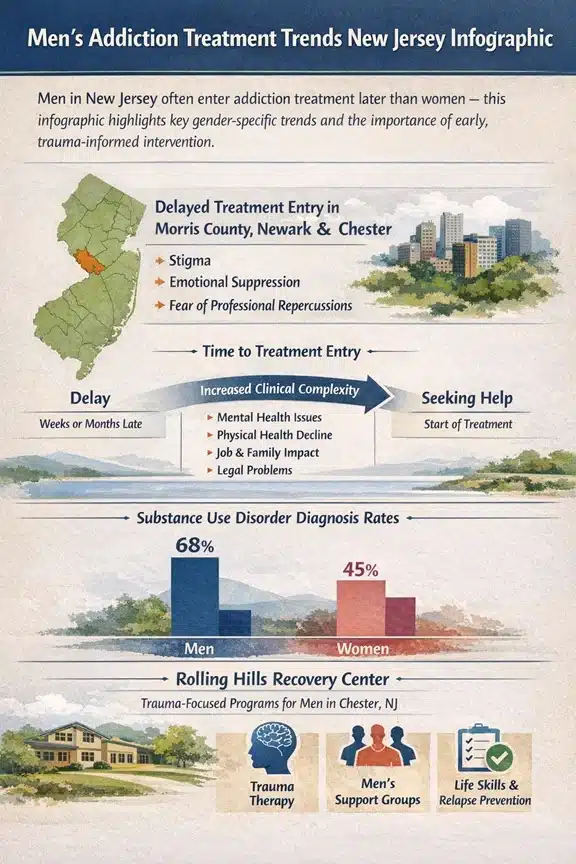
Why Do Men Often Delay Seeking Treatment?
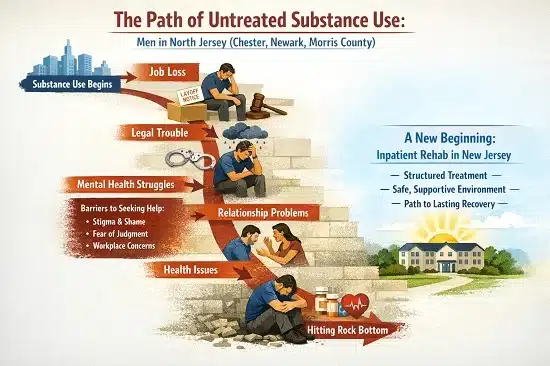
Many men don’t seek help for substance use until things have already started to fall apart. In towns near Chester and across northern New Jersey, it’s common to see people arrive at treatment after a serious event: losing a job, running into legal trouble, or dealing with health issues that have built up over time. These delays aren’t always due to a lack of concern. For a lot of men, it’s about staying in control, avoiding judgment, or feeling like asking for help isn’t an option.
The Substance Abuse and Mental Health Services Administration (SAMHSA) has reported that men engage in high-risk substance use more often than women, but are much less likely to access behavioral health services early. When trauma, depression, or anxiety are also in the picture, that delay can stretch even further.
In areas near Morris County and the Newark region, stigma still plays a role. Many men express concern about how entering treatment might impact work, family life, or their reputation. That pressure can keep someone stuck in a cycle that’s getting harder to manage.
Programs that focus on structure, stability, and routine tend to help men engage sooner and stay longer. For those at a breaking point, inpatient drug rehab in New Jersey offers a setting where the focus can shift entirely to recovery. These programs create space to reset, without distractions, and build momentum that’s often hard to find alone.
What Types of Rehab Programs Support Men Best?
Not all treatment programs are built the same way. For men working to recover from substance use, certain features tend to make a difference. Programs that focus on structure, peer support, and skill-building often lead to better engagement and more consistent progress.
Many inpatient rehab centers have adjusted their approach to better support male clients. That often means creating clear daily routines, offering therapy that focuses on behavior patterns, and building trust within peer groups. Cognitive Behavioral Therapy, trauma-informed care, and structured group sessions are common pieces of this framework.
Group work can be especially effective. For men who have spent years holding things in or managing emotional stress without support, being part of a group where others share similar experiences can create space for change. Sessions that focus on real challenges, such as work pressure, family roles, or unresolved grief, often lead to more participation and stronger connections.
Facilities near Chester, NJ, combine clinical care with practical structure. Consistent schedules, measurable goals, and shared accountability help reduce uncertainty and support long-term recovery. These programs are designed not only to address substance use but also to help rebuild daily rhythm and personal stability.
When Is It Time to Seek Inpatient Help?
Inpatient treatment is often recommended when outpatient support is no longer enough to manage daily life or maintain stability. For many men, the tipping point comes after repeated attempts to control substance use without long-term success. Some enter care after a relapse, while others are referred by a provider or family member when day-to-day functioning starts to break down.
There are certain signs that may indicate inpatient rehab is the right next step. These can include withdrawal symptoms that are difficult to manage, persistent use despite serious consequences, or the presence of untreated mental health concerns. When depression, trauma, or anxiety interfere with sleep, focus, or emotional stability, a higher level of support may be necessary.
Treatment centers near Chester and throughout New Jersey often see admissions following a crisis or turning point. That might involve legal issues, medical emergencies, or events that make it harder to hide how much substance use is affecting life. Inpatient care does not need to be a last resort. For some, it offers a proactive way to prevent further decline and create space to focus on recovery.
Programs that provide twenty-four-hour support, clinical guidance, and a steady daily routine can offer a clear reset. These structured, clinically intensive care options are often the most effective setting when outpatient care has not been enough.
How Structured Programs Improve Long‑Term Recovery
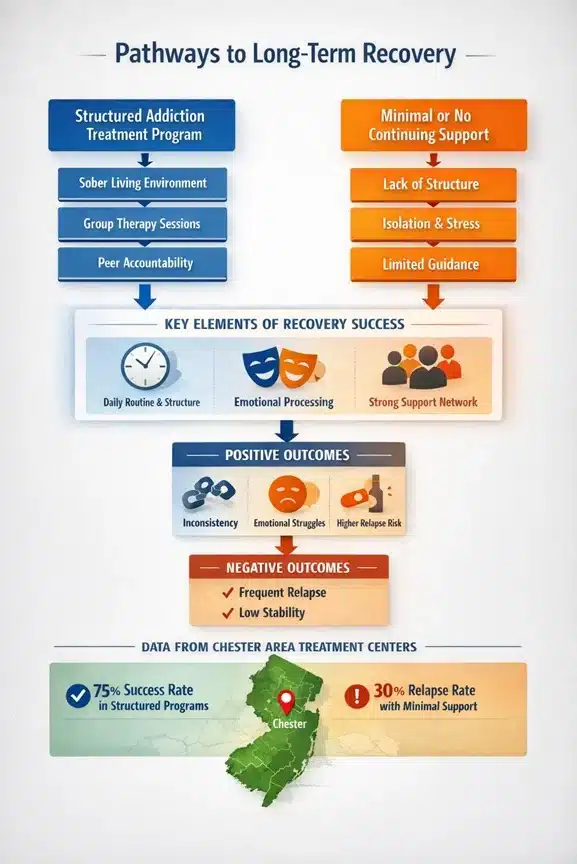
Recovery does not end when inpatient care is completed. For men, keeping progress steady into the months that follow treatment often depends on the habits, skills, and support built during rehab. Programs that emphasize consistent routines and supportive communities often help men transition more confidently back to daily life.
Therapy that focuses on long‑term behavior patterns and emotional processing can support lasting change. For example, the role of group therapy in lasting recovery highlights how shared experience and peer accountability reinforce skills learned during structured care. These elements often become part of a daily rhythm that supports resilience and ongoing growth.
Outcome tracking from treatment centers near Chester and throughout New Jersey suggests that continued structure increases the likelihood of sustained progress. Whether through extended peer support, targeted therapy, or ongoing skill‑building groups, keeping connection and routine helps maintain momentum.
Programs that integrate these elements into discharge planning and aftercare tend to support stronger outcomes. By focusing on stability and purpose alongside clinical care, long‑term recovery becomes an active process that carries forward beyond any one setting.
Parenting, Pressure, and Recovery
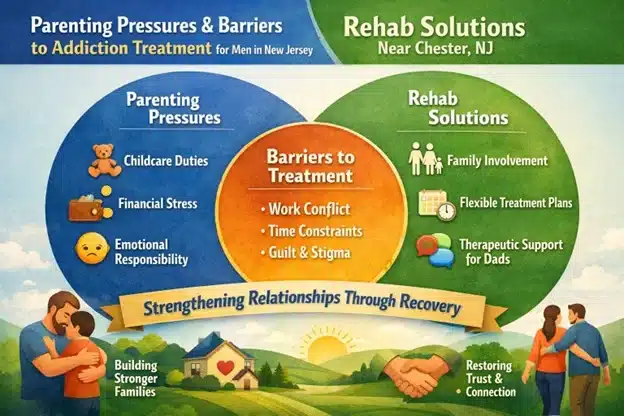
For men who are parents or primary caregivers, stepping away to enter treatment can feel like a disruption rather than a solution. Concerns about family responsibilities, household stability, or how loved ones will manage in their absence often become reasons to delay care. Yet untreated substance use can quietly erode the very connections men are trying to protect.
In clinical settings near Chester and throughout New Jersey, it’s increasingly common to see treatment programs that acknowledge these pressures directly. Group therapy and individual sessions often make space to talk about the emotional weight of being a father, partner, or provider. This kind of support helps reduce shame and builds clarity around long-term goals.
Knowing when it’s time to consider treatment can ease some of the hesitation that comes with caretaking roles. When programs offer flexible planning, clear communication strategies, and family involvement, men tend to engage more fully and stay longer. That foundation often creates space not just for recovery, but for stronger relationships moving forward.
Final Thoughts on Men’s Treatment in New Jersey
Research shows that men are more likely to meet lifetime criteria for substance use disorders compared to women, reinforcing the need for treatment models that reflect gender-specific challenges. A recent clinical review from the National Library of Medicine highlights these trends across behavioral health and supports the value of targeted intervention strategies.
Substance use among men often follows a delayed path to treatment, shaped by social pressure, stigma, and family responsibility. Inpatient care programs near Chester and throughout New Jersey are adapting to these realities with structured models that focus on routine, stability, and peer support.
The decision to seek help can feel complicated, especially for those managing career and parenting roles. But recovery becomes more sustainable when treatment reflects the lived experiences men bring with them. Programs that integrate behavioral therapy, accountability, and long-term planning continue to show stronger outcomes and improved retention.
Gender-informed treatment is not about separating care. It is about tailoring support in a way that works. As awareness grows, so does access to models of care that respect the unique challenges men face while creating space for real change.
FAQs About Men’s Addiction Treatment in New Jersey
What makes addiction treatment different for men?
Men often face unique emotional and social pressures that affect how and when they seek help. Programs that focus on routine, structure, and peer-based therapy tend to create a safer, more effective space for recovery.
Is inpatient treatment better than outpatient for men?
That depends on the severity of the situation. Inpatient programs offer full-time care and routine, which can be helpful for men who need a break from external pressures or who have struggled with relapse.
Can men with parenting responsibilities still go to rehab?
Yes. Many programs offer planning and support that takes family obligations into account. Engaging in treatment often helps rebuild family connection and stability over time.