

It can be difficult to recognize when someone close is struggling with more than one type of substance. Behavioral changes might be subtle at first, such as unexplained absences, erratic mood swings, secrecy, or denial, but over time, patterns begin to emerge that point toward something deeper.
Multiple substance use, or the act of regularly using two or more substances either at the same time or in close succession, is more common than many people realize. This pattern may include mixing alcohol with prescription medications or combining illicit drugs to enhance or balance certain effects. Often, individuals intentionally conceal this behavior due to fear of judgment, shame, or not wanting loved ones to intervene.
According to the SAMHSA Report, using multiple substances significantly increases the risk of overdose, unpredictable mental effects, and long-term health issues.
Recognizing these signs early can play a critical role in guiding someone toward appropriate clinical support. This article outlines the key emotional, behavioral, and physical indicators of hidden substance use, explores common motivations for concealment, and explains when professional assessment may be necessary.

Understanding Multiple Substance Use
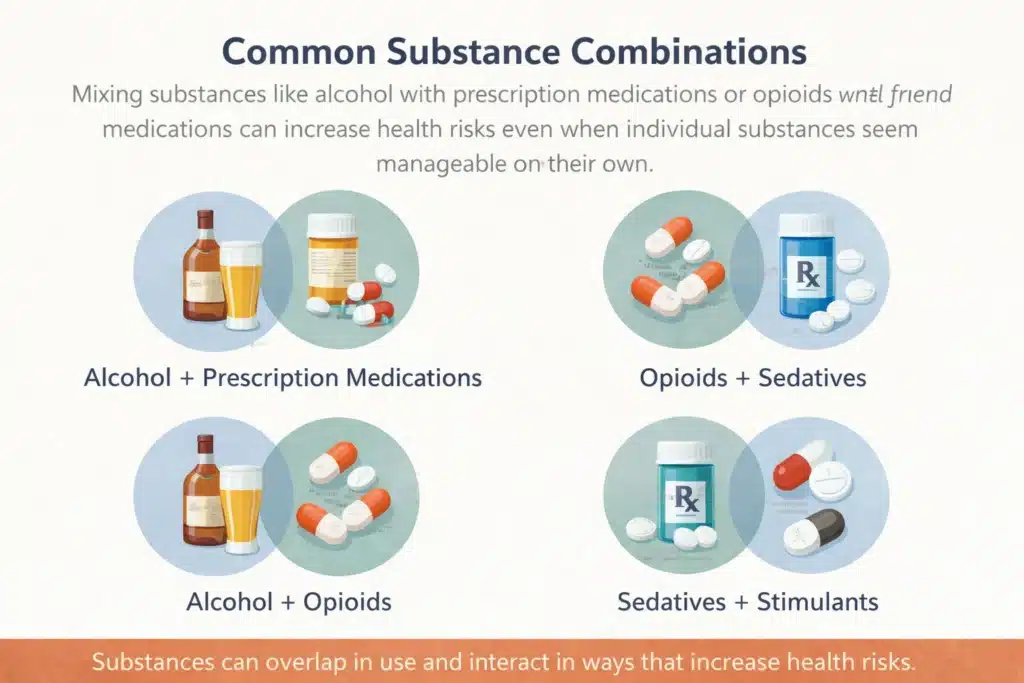
Multiple substance use, sometimes referred to as concurrent or combined substance use, involves using more than one drug or substance either simultaneously or within overlapping timeframes. This can include combinations such as alcohol with prescription medications, stimulants with sedatives, or opioids with other depressants. While some individuals may use these combinations intentionally to amplify or balance certain effects, others may not fully understand the risks associated with mixing substances.
One of the reasons this type of use is difficult to detect is that it doesn’t always follow a consistent pattern. A person may appear to be under the influence of a single substance, while actually navigating the compounded effects of several. These combinations can mask typical symptoms, making it harder for loved ones to recognize the severity of the situation.
The CDC fact sheet reports that many overdose deaths involve more than one substance, especially combinations like opioids and alcohol. Combinations such as opioids with alcohol or benzodiazepines are especially high-risk and can result in severe respiratory depression, unconsciousness, or death, even when the individual substances are taken in relatively low doses.
Understanding the patterns and risks associated with multiple substance use is critical when trying to identify whether a loved one may be hiding their behavior. In many cases, the warning signs are subtle at first and are often rationalized or overlooked until a serious event occurs.
One high-risk combination is alcohol and benzodiazepines, which can severely impair cognition and increase the chance of overdose. Learn more about the dangers of mixing benzos and alcohol.
Emotional and Behavioral Signs Your Loved One May Be Hiding Drug and Alcohol Use
Substance use is often concealed, especially when multiple substances are involved. For loved ones, the most telling indicators are not always physical; they’re behavioral and emotional. When someone is hiding drug or alcohol use, particularly in combination, subtle shifts in mood, habits, and interaction patterns often appear first.
Many individuals who use substances covertly may go to great lengths to maintain appearances. They may continue fulfilling daily responsibilities, making it difficult to recognize that anything is wrong. However, over time, inconsistencies and emotional changes tend to surface.
Common Emotional and Behavioral Signs:
- Unpredictable mood swings – sudden shifts from calm to irritable, anxious, or withdrawn
- Increased secrecy – locking doors, hiding their phone, or being vague about their whereabouts
- Defensiveness – overreacting to simple questions about activities or well-being
- Social withdrawal – avoiding family gatherings, phone calls, or close friendships
- Changes in daily routine – altered sleep patterns, disappearing for long periods, or being awake at odd hours
- Financial inconsistencies – missing money, unusual spending, or borrowing without clear reasons
- Neglect of appearance or responsibilities – not caring for hygiene, home, or work/school obligations
When multiple substances are involved, these changes may fluctuate in intensity. For example, a person using both stimulants and depressants may alternate between high-energy activity and deep lethargy, a pattern that can confuse or mislead those around them.
It’s also common for individuals to mask symptoms by blaming stress, work, or mental health struggles. While those may be contributing factors, they can also serve as cover for deeper issues. Spotting these signs early doesn’t mean rushing to confront them, but it does mean paying closer attention and considering whether professional guidance may be necessary.
Signs and Symptoms of Using Multiple Substances
When someone is using multiple substances, especially in secret, the physical and psychological symptoms can be inconsistent, unpredictable, and often mistaken for other issues like anxiety, depression, or chronic illness. This makes polydrug use especially difficult to detect, even for close family members
Because substances can amplify or counteract each other, their combined effects can create confusing patterns. For example, someone using a stimulant during the day and a depressant at night may appear functional or even energetic at times, while experiencing extreme fatigue, irritability, or emotional shutdowns shortly afterward. These kinds of fluctuations are common and can easily be misread.
Common Physical Symptoms:
- Irregular sleep or wake cycles
- Changes in weight or appetite
- Tremors or instability in movement
- Dilated or pinpoint pupils
- Sweating, shaking, or unexplained fatigue
- Slurred speech or slowed reaction time
Common Psychological Symptoms:
- Sudden episodes of paranoia or panic
- Memory gaps or trouble concentrating
- Emotional detachment or numbness
- Rapid mood changes unrelated to external events
- Depressive episodes followed by bursts of agitation or restlessness
To better understand how specific drug pairings contribute to this risk, see this overview of alcohol & benzo interaction guide, one of the most dangerous and often-overlooked combinations.
In cases where these symptoms persist or worsen, it may be appropriate to explore evidence-based therapeutic approaches for complex substance use as part of a broader care plan, especially when multiple substances are involved, and the person is unwilling or unable to discuss them openly.
Why People Hide Multiple Substance Use
When someone is using more than one substance, secrecy is often part of the behavior. For families and loved ones, this can be one of the most painful aspects, not just discovering the substance use itself, but realizing it was hidden for weeks, months, or even years.
Understanding why a person might go to such lengths to conceal their use is essential to approaching the situation with clarity and empathy.
There’s no single reason people hide substance use, but several overlapping factors are common:
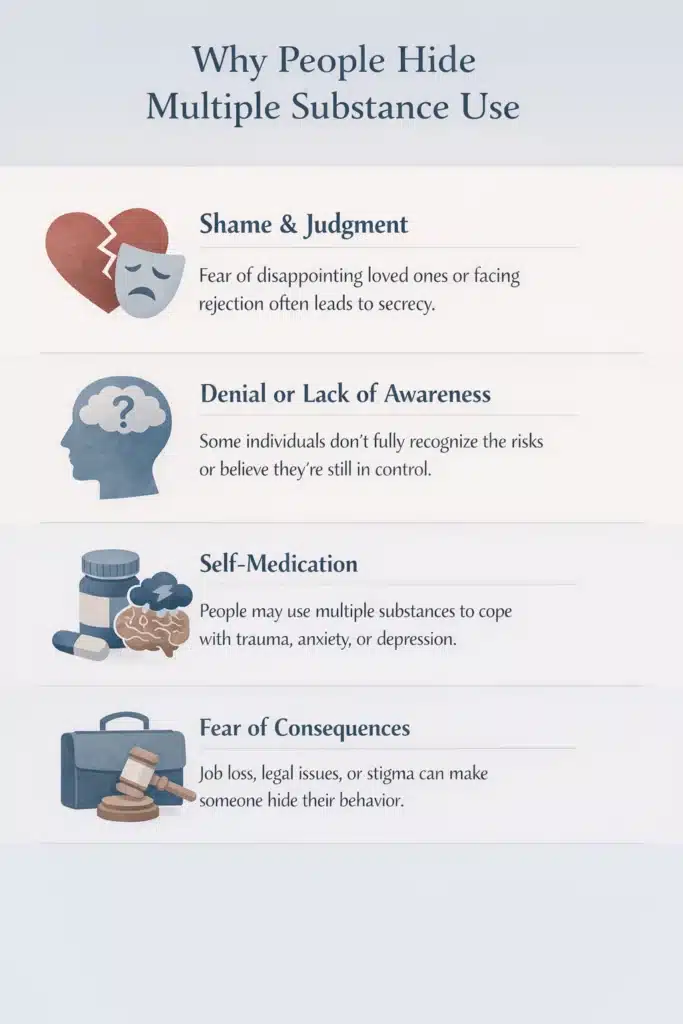
1. Shame and Fear of Judgment
Many individuals feel deep shame about their behavior, particularly if they’ve relapsed or are using substances that society strongly stigmatizes. They may fear disappointing family, damaging their reputation, or facing rejection.
2. Denial or Lack of Awareness
Some individuals don’t fully realize the extent of their substance use, or they may not view combining substances as especially dangerous. They might believe they have things “under control,” even if their use has escalated.
3. Self-Medication and Co-Occurring Issues
Substance use is frequently tied to emotional pain, trauma, or untreated mental health conditions. People who are using multiple substances may be trying to manage anxiety, depression, or trauma symptoms without professional help. Studies on co-occurring disorders show that those with mental health challenges are more prone to using multiple substances to self-medicate.
4. Fear of Consequences
Concerns about losing a job, legal repercussions, or being forced into treatment can all drive a person to hide their behavior. This is especially true for individuals who have previously been in recovery or are in environments with strict expectations.
What You Can Do as a Family Member
When you suspect that someone you care about may be hiding substance use, especially the use of multiple substances, it is normal to feel overwhelmed, confused, and unsure of what to do next. While the instinct may be to confront the situation directly, it is important to first approach the issue with a mindset rooted in observation, support, and preparation.
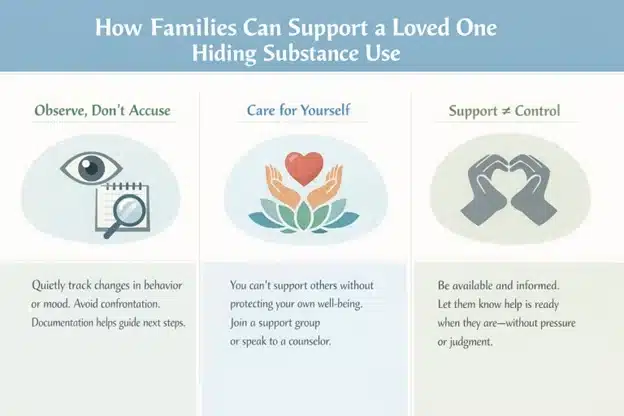
Focus on Awareness Over Accusation
Try to observe patterns without immediately labeling or confronting. Abrupt accusations can trigger defensiveness or further secrecy. Instead, begin documenting concerning behaviors, emotional changes, or physical symptoms over time. This record can help you gain clarity and provide useful context if professional support becomes necessary.
Take Care of Your Own Well-Being
Watching a loved one struggle (often in silence) can take a significant emotional toll. It’s crucial to have your own support system in place. Whether through individual counseling, support groups, or structured family therapy, caring for yourself is a foundational step toward helping someone else.
To better understand how therapy can help families dealing with addiction, visit our guide on how family therapy supports addiction recovery.
Know That Support Doesn’t Mean Control
Offering support doesn’t mean taking on the responsibility of someone else’s recovery. It means being present, informed, and ready to guide them toward help when they’re willing to accept it. Sometimes the most powerful thing a family member can do is provide a calm, stable presence and accurate information about options for care.
The Role of Therapy and Family Support
Therapy plays a central role in helping individuals who use multiple substances uncover the reasons behind their behavior, address the underlying emotional drivers, and develop healthier coping strategies. But treatment doesn’t stop with the individual; family involvement is often a key factor in long-term recovery outcomes.
Therapy offers a structured, nonjudgmental environment where individuals can explore patterns of use, identify co-occurring mental health concerns, and begin to untangle the emotional roots of their behavior. For those hiding substance use, this setting often provides the first opportunity to speak openly without fear of consequence or judgment.
Family support is just as critical. Many loved ones experience confusion, guilt, or emotional exhaustion while trying to help someone struggling with hidden substance use. Participating in therapy, whether through dedicated family sessions or individual counseling, can help clarify boundaries, improve communication, and rebuild trust over time.
Support doesn’t require having all the answers. Simply showing up with consistency, a willingness to learn, and a commitment to healthier dynamics can make a significant difference. While therapy isn’t a quick fix, it is a reliable starting point for healing, both individually and as a family unit.
When It’s Time to Seek Professional Help
Recognizing that a loved one may be hiding substance use is emotionally challenging, but deciding when to involve professional help can be even harder. The decision often comes down to a combination of consistent red flags, emotional exhaustion, and a growing sense that something deeper is going on, even if the person hasn’t admitted it.
If you’re noticing ongoing patterns of secrecy, emotional volatility, unexplained physical symptoms, or changes in functioning, especially when more than one substance may be involved, these are signs that the situation may be beyond what support from friends or family alone can address.
Professional help can provide what families often can’t: clinical insight, medical screening, and a safe environment for honest evaluation. Early intervention can also prevent the escalation of symptoms and reduce the risk of serious consequences such as overdose, legal issues, or long-term health effects.
It’s not necessary to wait for a crisis before seeking help. Many families begin the process quietly by gathering info, seeking professional input, or reviewing the rehab admissions process at Rolling Hills before talking to the person directly. Taking these quiet steps early can lead to a more thoughtful, effective approach when the time for conversation or treatment does arrive.
Frequently Asked Questions
How Can I Tell if Someone is Hiding Drug or Alcohol Use?
Signs may include sudden mood changes, increased secrecy, unusual sleep or spending patterns, or withdrawal from relationships. When multiple substances are involved, symptoms can appear inconsistent or difficult to explain.
Why Would Someone Hide That They’re Using More Than One Substance?
People often conceal substance use due to fear of judgment, shame, denial, or concerns about consequences. Some may not realize the risks of combining substances, particularly if they are using them to cope with emotional distress or mental health issues.
What Are the Health Risks of Mixing Substances Like Alcohol and Prescription Drugs?
Combining substances can amplify their effects and increase the risk of overdose, respiratory depression, and impaired judgment. Even small doses can be dangerous when taken together, especially with depressants like alcohol, opioids, or benzodiazepines.
Can Therapy Help Even if the Person Won’t Admit to Substance Use?
Yes. Therapy can provide support for both the individual and their loved ones, even before the person acknowledges the issue. Family members can benefit from guidance on setting boundaries, managing stress, and preparing for future conversations about recovery.
When Should I Reach Out for Professional Help?
If concerning behaviors persist or escalate, and especially if there is reason to believe more than one substance is involved, it's appropriate to seek professional support. Early intervention can reduce long-term harm and open the door to recovery.