

Opioid addiction treatment in New Jersey addresses dependence on heroin, fentanyl, and prescription opioids. Programs in Morris County and Northern New Jersey focus on detox, therapy, medication management, and relapse prevention.
Below are seven components commonly included in opioid addiction treatment programs.
1. Medically Supervised Opioid Detox
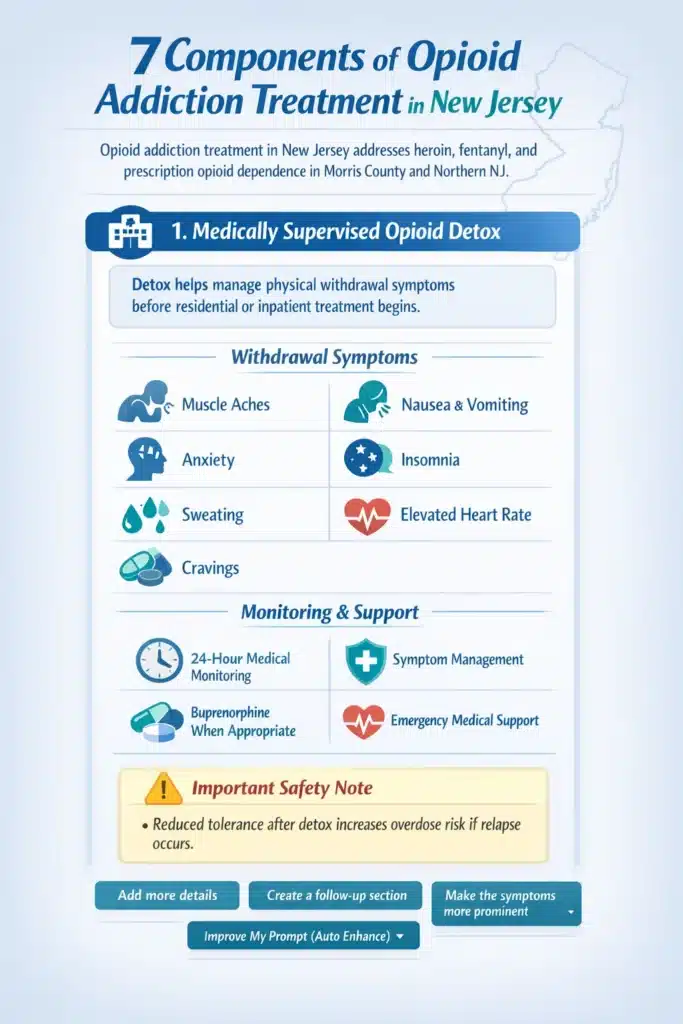
Opioid addiction treatment often begins with medically supervised detox. Detox addresses the physical effects of opioid withdrawal before residential or inpatient treatment begins.
Opioid withdrawal symptoms may include:
- Muscle aches
- Nausea and vomiting
- Anxiety
- Insomnia
- Sweating
- Elevated heart rate
- Cravings
Withdrawal timelines vary depending on the substance used, duration of use, and tolerance level. Fentanyl and heroin withdrawal may differ from prescription opioid withdrawal.
Licensed medical detox facilities typically provide:
- 24-hour medical monitoring
- Withdrawal symptom management
- Detox stabilization
- Medications such as buprenorphine, when clinically appropriate
- Emergency medical support
Tolerance can decrease after a period without opioid use. If relapse occurs, this reduced tolerance may increase the risk of overdose, a concern noted in public health guidance from the Centers for Disease Control and Prevention (CDC) on reduced opioid tolerance and overdose risk.
Some individuals complete detox in a separate licensed medical facility before entering residential treatment programs in New Jersey.
2. Medication-Assisted Treatment (MAT)
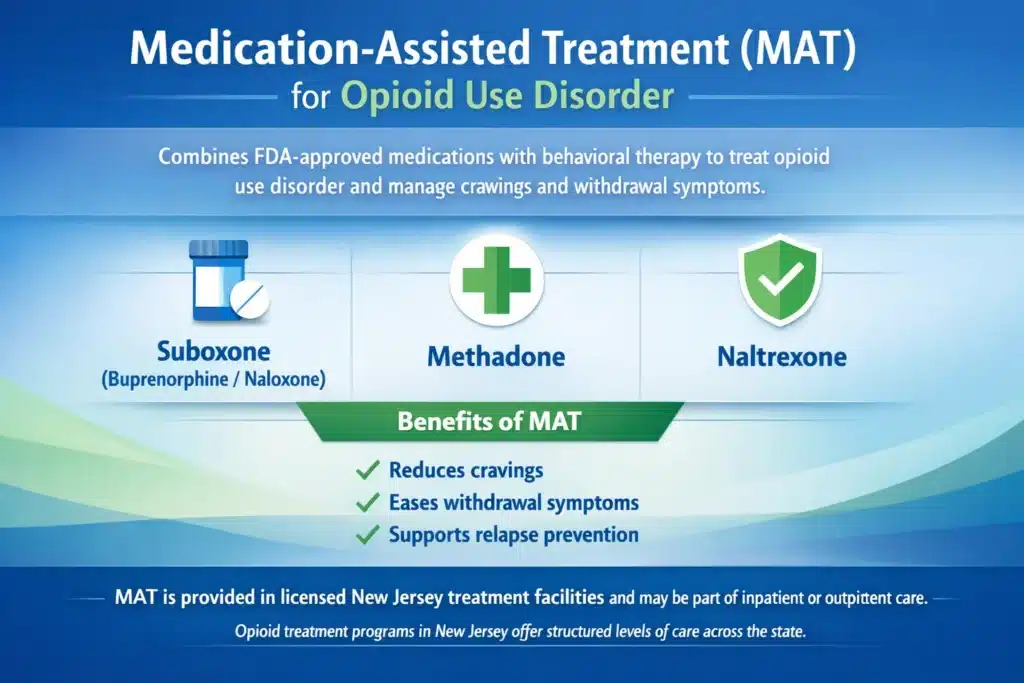
Medication-Assisted Treatment combines medication with behavioral therapy to treat opioid use disorder (OUD). Clinical guidance on FDA-approved MAT medications details how these medications are used to manage cravings and withdrawal symptoms.
Medications may include:
- Suboxone (buprenorphine/naloxone)
- Methadone
- Naltrexone
These medications are used to:
- Reduce cravings
- Ease withdrawal symptoms
- Support relapse prevention
MAT is provided in licensed New Jersey treatment facilities and may be part of inpatient or outpatient care. Information on opioid treatment programs in New Jersey provides details about structured levels of care across the state.
3. Dual Diagnosis Treatment
Research on co-occurring mental health and substance use disorders highlights the need for coordinated behavioral health care. The National Alliance on Mental Illness (NAMI) identifies the overlap between substance use disorders and other psychiatric conditions.
Dual diagnosis treatment addresses substance use and mental health disorders within the same treatment plan rather than treating them separately.
Treatment includes:
- Cognitive behavioral therapy (CBT)
- Trauma-informed care
- Psychiatric evaluation
- Medication management
Addressing both conditions within an integrated framework reduces relapse triggers linked to untreated psychiatric symptoms and supports treatment stability. Dual Diagnosis treatment integrates substance use treatment with psychiatric care for co-occurring mental health conditions.
4. Inpatient Rehabilitation Programs
Inpatient rehab provides residential care following detox.
Programs may include:
- Structured daily schedules
- Individual therapy
- Group therapy
- Clinical supervision
- Relapse prevention planning
Residential settings reduce outside distractions and allow focus on recovery skills.
5. Aftercare and Relapse Prevention
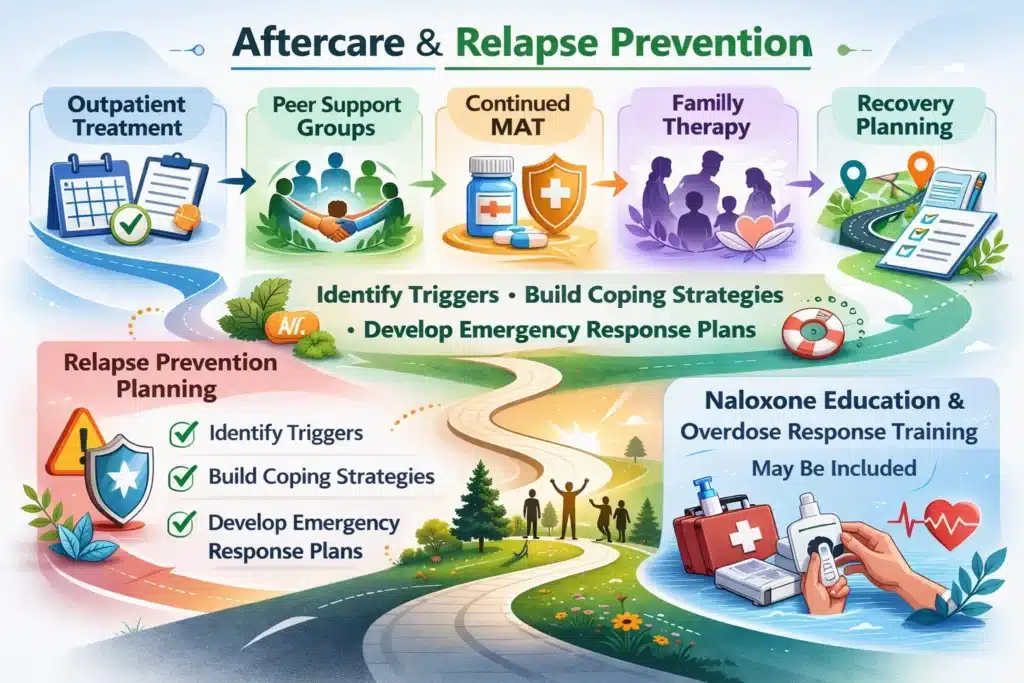
Treatment often continues after inpatient care.
Aftercare services may include:
- Outpatient treatment
- Peer support groups
- Continued MAT
- Family therapy
- Recovery planning
Relapse prevention planning identifies triggers and coping strategies. Some programs provide education on naloxone and overdose response.
6. Insurance Coverage in New Jersey
Many opioid addiction treatment programs accept:
- Private insurance
- Aetna
- Blue Cross Blue Shield NJ
- Other insurance providers
Insurance verification determines coverage for detox, inpatient treatment, dual diagnosis services, and medication-assisted treatment. Insurance verification confirms coverage eligibility for detox, inpatient care, and medication-assisted treatment services.
7. Access to Treatment in Northern New Jersey
Treatment centers in Morris County serve residents of:
- Chester, NJ
- Morristown
- Mendham
- Denville
- Surrounding Northern New Jersey communities
Licensed facilities in New Jersey operate under state regulations. Addiction treatment near Morris County, NJ includes licensed programs serving Northern New Jersey communities.
Why Opioid Treatment Includes Multiple Levels of Care
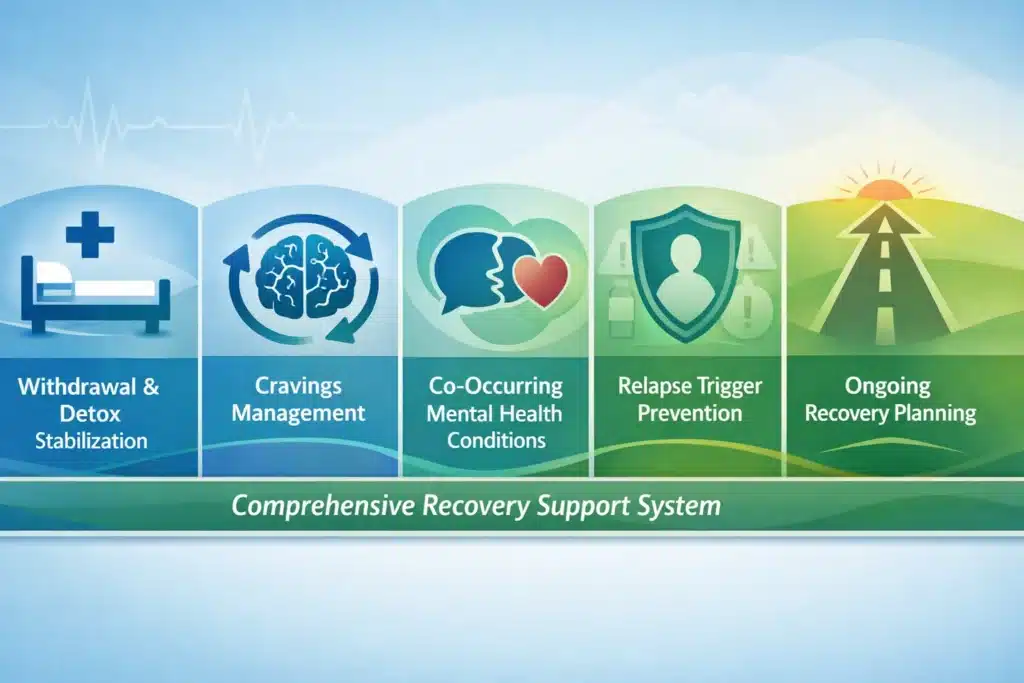
Opioid use disorder affects physical dependence, tolerance, and behavior patterns. Treatment may address:
- Withdrawal and detox stabilization
- Cravings
- Co-occurring mental health conditions
- Relapse triggers
- Ongoing recovery planning
Detox, therapy, medication management, and aftercare are often combined within a structured treatment plan.
Frequently Asked Questions About Opioid Treatment in New Jersey
What is the Safest Way to Detox from Opioids?
Medical detox with 24-hour monitoring allows withdrawal symptoms to be managed in a supervised setting.
How Long Does Opioid Withdrawal Last?
Withdrawal length depends on the substance used, duration of use, and individual health factors. Symptoms often peak within several days.
Does Medication-Assisted Treatment Replace One Addiction with Another?
MAT medications are prescribed to reduce cravings and withdrawal symptoms. They are used as part of a structured treatment plan.
Can Treatment Address Mental Health Conditions?
Dual diagnosis programs treat opioid use disorder alongside anxiety, depression, PTSD, and other mental health conditions.