

Substance use disorders develop over time, making the warning signs easy to miss in the beginning. What starts as a change in habits or behavior can gradually affect a person’s physical health, emotional well-being, relationships, and daily responsibilities. As substance use becomes a larger part of someone’s life, these changes become more noticeable and harder to ignore. Recognizing the signs early is important.
Whether you’re concerned about yourself or a loved one, understanding the behavioral, emotional, and physical signs of a substance use disorder helps you identify when professional support and treatment should be considered.
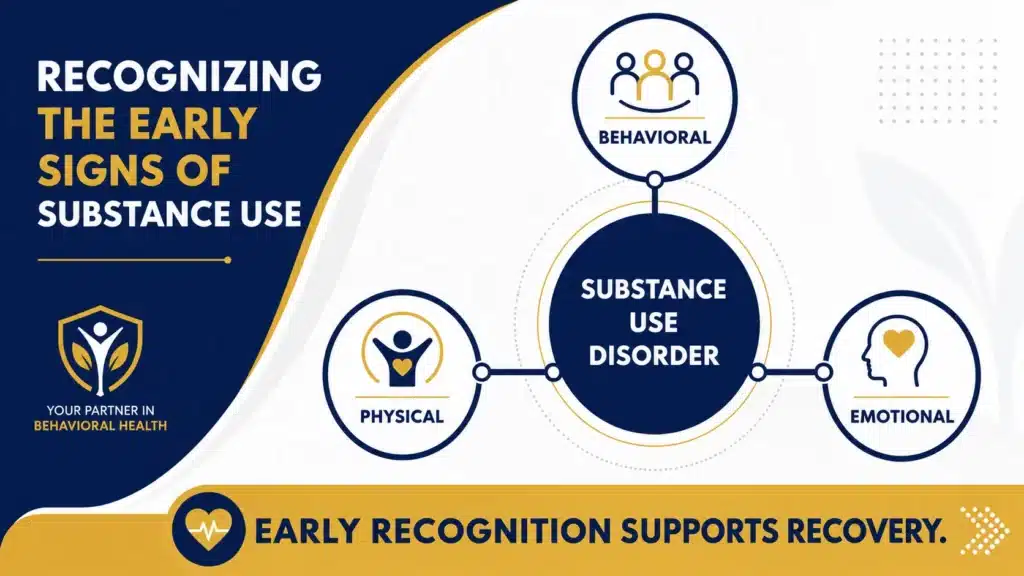
What Is a Substance Use Disorder?
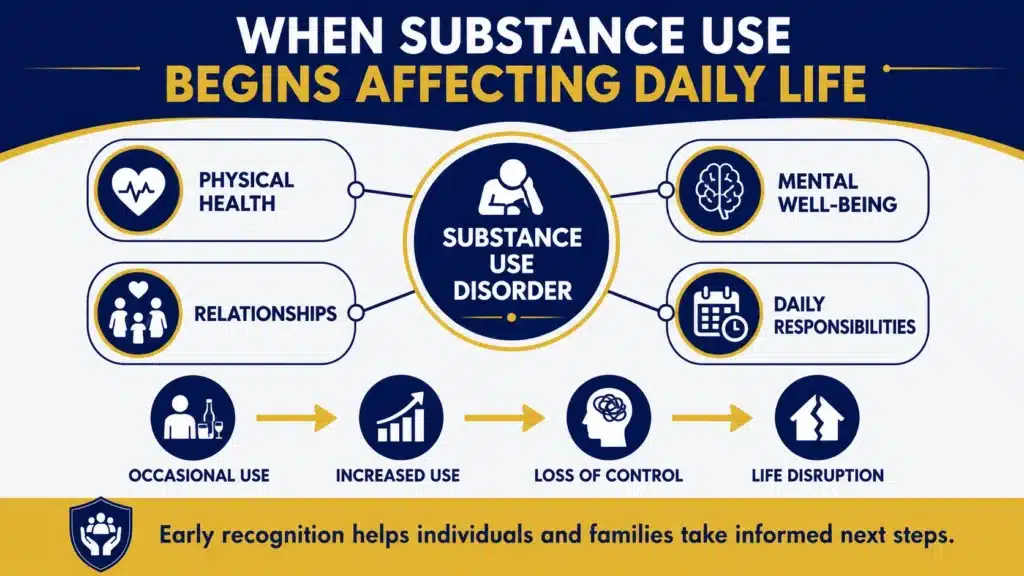
A substance use disorder (SUD) is a medical condition that affects a person’s ability to control their use of alcohol or drugs despite the negative consequences. As substance use becomes more frequent, it begins to interfere with important areas of life, including physical health, mental well-being, relationships, work, and daily responsibilities.
According to the Mayo Clinic’s overview of drug addiction and substance use disorder, addiction involves a pattern of substance use that continues even when it causes serious problems. Over time, the brain becomes increasingly focused on obtaining and using substances, making it more difficult to stop without support.
Understanding the distinction between casual substance use and addiction is important. Recognizing the signs of addiction can help individuals and families identify when substance use has become a more serious concern.
Many people overlook the early warning signs because the changes develop gradually. Shifts in behavior, mood, routines, or priorities can appear subtle at first, making them easy to dismiss. Recognizing these changes early creates an opportunity to address the problem before it causes further damage to a person’s health, relationships, and overall quality of life.
Common Behavioral Warning Signs of a Substance Use Disorder
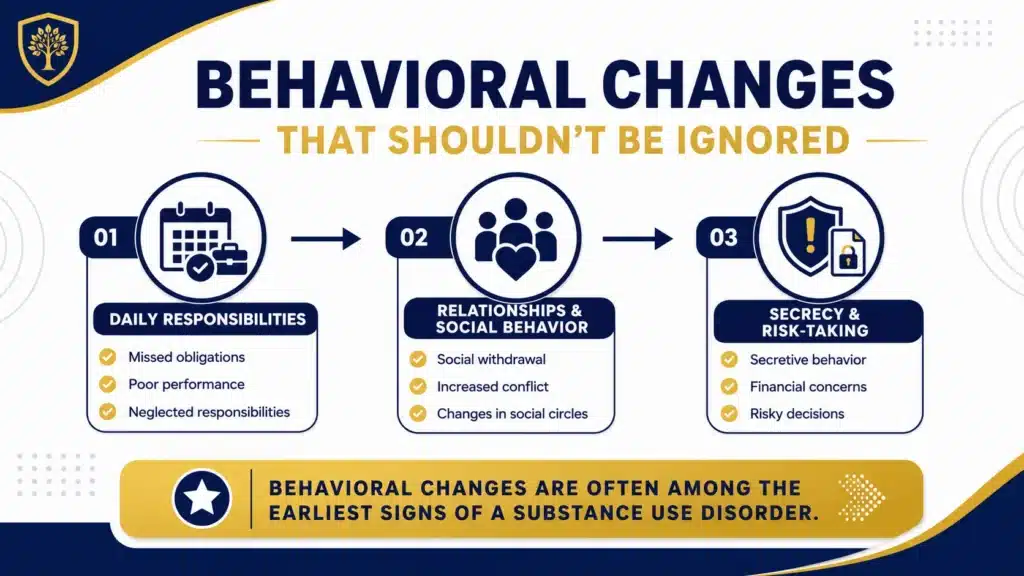
Behavioral changes are often among the first noticeable signs of a substance use disorder. As substance use becomes a greater priority, daily habits, relationships, and decision-making begin to change. While the specific behaviors vary from person to person, certain patterns frequently signal that substance use is becoming a serious concern.
Changes in Daily Responsibilities
A decline in performance at work, school, or home is one of the most common warning signs of addiction. Responsibilities that were once handled consistently start to fall by the wayside. Someone might miss deadlines, skip classes, arrive late to work, or neglect household obligations. As substance use takes up more time and attention, maintaining everyday responsibilities becomes increasingly difficult.
Social Withdrawal and Relationship Problems
Substance use often changes how a person interacts with family, friends, and loved ones. They may begin avoiding social gatherings, distancing themselves from long-term relationships, or spending more time with people who encourage substance use. Increased arguments, broken trust, and growing tension within relationships are also common. Over time, the focus on obtaining or using substances can outweigh the importance of maintaining healthy personal connections.
Risky or Secretive Behavior
People struggling with a substance use disorder frequently become more secretive about their activities. They may lie about where they have been, hide evidence of substance use, become defensive when questioned, or create elaborate explanations to avoid suspicion. Financial problems, impulsive decisions, and engaging in risky situations are also common warning signs.
Individuals often go to significant lengths to conceal their substance use from family and friends. Recognizing these patterns can be especially challenging when more than one substance is involved. Our article on signs of hiding multiple substance use explores additional behaviors that can indicate someone is actively trying to hide an ongoing substance use problem.
Physical Signs and Symptoms to Watch For
Substance use disorders affect more than behavior and decision-making. They also create noticeable physical changes that become increasingly difficult to hide over time. While the signs vary depending on the substance being used, changes in appearance, sleep patterns, and overall health often indicate that something more serious is happening.
Changes in Appearance
One of the most visible signs of a substance use disorder is a noticeable change in physical appearance. Significant weight loss or weight gain can occur when substance use begins affecting appetite, nutrition, and daily routines. Personal hygiene often declines as maintaining basic self-care becomes less of a priority. Bloodshot eyes, dilated or constricted pupils, and a consistently tired appearance are also common indicators that substance use is impacting a person’s health and well-being.
Sleep and Energy Changes
Many substances disrupt normal sleep patterns, leading to dramatic changes in energy levels and daily functioning. Some individuals struggle with insomnia and find it difficult to fall or stay asleep. Others sleep for extended periods and experience excessive daytime drowsiness. Fatigue, low motivation, and difficulty concentrating often accompany these disruptions, making it harder to keep up with work, school, and personal responsibilities.
Physical Health Concerns
Ongoing substance use places significant stress on the body. Frequent illnesses, recurring headaches, and a weakened ability to recover from common health issues can signal that substance use is taking a toll. Tremors, shaking, and coordination problems are also common physical warning signs. In some cases, individuals experience unexplained injuries resulting from impaired judgment, accidents, falls, or other risky situations associated with substance use.
Some substances also leave visible physical evidence that family members and loved ones may overlook. For example, certain prescription medications and illicit substances can be administered through transdermal patches. Understanding these indicators can help identify potential substance use concerns.
Emotional and Mental Health Warning Signs
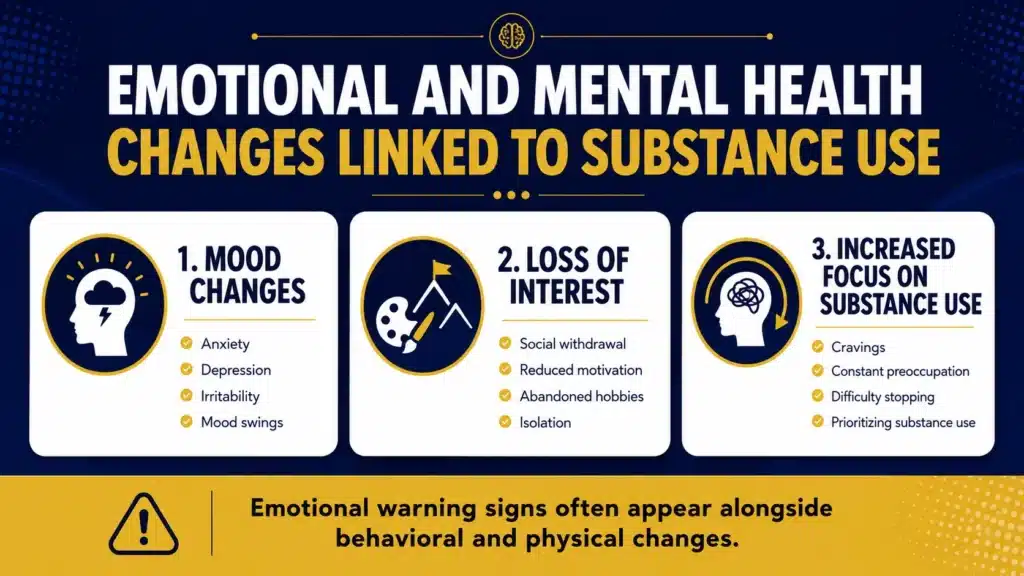
Substance use disorders affect a person’s emotional well-being just as much as their physical health. As substance use becomes more frequent, changes in mood, motivation, and thought patterns often become increasingly noticeable. These shifts can strain relationships, interfere with daily responsibilities, and make it difficult to focus on anything outside of substance use.
Mood Changes
Significant changes in mood are common among individuals struggling with a substance use disorder. Irritability, anxiety, depression, and emotional instability can become part of everyday life. Someone who was once calm and dependable may begin to experience frequent mood swings, heightened frustration, or intense emotional reactions to situations that would not previously have caused concern. These emotional changes can affect relationships, work performance, and overall quality of life.
Loss of Interest in Activities
A growing loss of interest in hobbies, personal goals, and social activities is another common warning sign. Activities that once brought enjoyment often become less important as substance use takes priority. Individuals may withdraw from friends and family, spend more time alone, and show little interest in responsibilities or experiences they once valued. Reduced motivation and a lack of engagement with daily life frequently accompany this shift.
Increased Focus on Obtaining or Using Substances
As a substance use disorder progresses, obtaining and using substances becomes a central focus. A significant amount of time is spent thinking about, planning for, or recovering from substance use. Cravings become more intense, and attempts to cut back or stop often prove unsuccessful. Over time, substance use begins influencing decisions, routines, and priorities, making it increasingly difficult to focus on anything else.
When Is It Time to Seek Professional Help?
Recognizing one warning sign doesn’t automatically mean someone has a substance use disorder. But when multiple behavioral, physical, and emotional signs begin appearing together, it is important to take them seriously. Changes in mood, declining performance at work or school, strained relationships, worsening physical health, and an increasing focus on substance use often indicate a problem that requires professional attention.
Many people delay seeking help because they believe the situation is not “serious enough” or that they can regain control on their own. Unfortunately, substance use disorders tend to become more disruptive over time, creating greater challenges for an individual’s health, relationships, finances, and overall quality of life.
Seeking help early provides the best opportunity to address the issue before the consequences become more severe. Treatment does not require someone to reach a crisis point before taking action. In fact, early intervention can help individuals build healthier coping skills, address the underlying causes of substance use, and establish a strong foundation for long-term recovery. Professional addiction treatment programs provide structured support designed to help individuals regain stability and begin the recovery process.
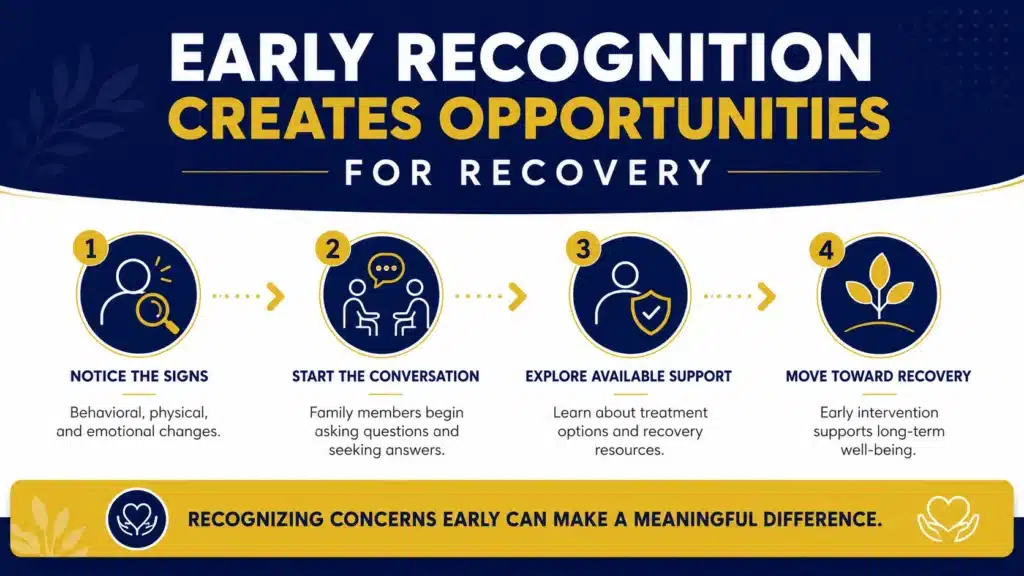
Recognizing the Signs Early Can Make a Difference
Substance use disorders affect people from all backgrounds, ages, and walks of life. While every situation is different, the warning signs often appear through a combination of behavioral changes, physical symptoms, and emotional struggles. Paying attention to these patterns can help families and individuals identify concerns before they escalate and begin causing more significant harm.
Recognizing the signs of substance use disorder early creates an opportunity to seek support, explore treatment options, and take meaningful steps toward recovery. No one needs to wait for a crisis to take action. Professional help is available, and early intervention can make a significant difference in long-term health and well-being.
The first step for families seeking help is recognizing that something has changed. Understanding why loved ones begin connecting the dots can provide valuable perspective. Our article on when families begin connecting the warning signs of substance use explores common experiences that lead families to seek answers, understand treatment options, and decide what next steps may look like.
Frequently Asked Questions
What Are the Earliest Signs of a Substance Use Disorder?
Some of the earliest signs of a substance use disorder include noticeable changes in behavior, increased secrecy, mood swings, declining performance at work or school, and neglecting personal responsibilities. Friends and family members often recognize these shifts before the individual acknowledges that substance use has become a problem.
Are Physical Symptoms Always Present?
Physical symptoms are not always the first signs to appear. Many people experience emotional and behavioral changes before noticeable physical effects develop. Irritability, isolation, changes in daily routines, and a growing focus on substance use often become apparent before changes in appearance or physical health.
How do I know if Someone Needs Professional Treatment?
Professional help should be considered when substance use begins affecting a person's health, relationships, work performance, finances, or overall quality of life. Multiple warning signs occurring together typically indicate that the issue extends beyond casual or recreational substance use and warrants professional assessment.
Can a Substance Use Disorder Be Treated Successfully?
Yes. Substance use disorders are treatable, and many people achieve lasting recovery with the right support. Evidence-based treatment, counseling, peer support, and ongoing recovery resources help individuals address the underlying causes of substance use and build healthier coping strategies for the future.