Opioid overdoses can happen quickly, and minutes matter. A medical addiction specialist outlines clear steps to spot warning signs, use naloxone, and provide rescue breathing while waiting for 911. Readers also learn common risks & xylazine concerns, and how to reduce harm. Finally, the piece explains opioid addiction treatment options and safe follow-up through Rolling Hills Recovery Center in NJ.
Key Takeaways
- Act fast: check breathing and responsiveness, call 911, give naloxone, then rescue breaths if needed, stay until EMS arrives
- Warning signs include hard-to-wake, slow or no breathing, shallow breaths, pinpoint pupils, gurgling or snoring sounds, blue or gray lips & nails; when unsure, treat it like an overdose
- Naloxone works for fentanyl; use intranasal or IM as labeled, repeat every 2–3 minutes if no response, it’s safe even if opioids aren’t the cause; brief withdrawal can happen
- Risk is highest after a break in use, when mixing with alcohol and benzodiazepines, and with unstable street supply; don’t use alone, try a test dose, carry naloxone & fentanyl test strips, re-check tolerance after any pause
Overview of Opioid Overdose
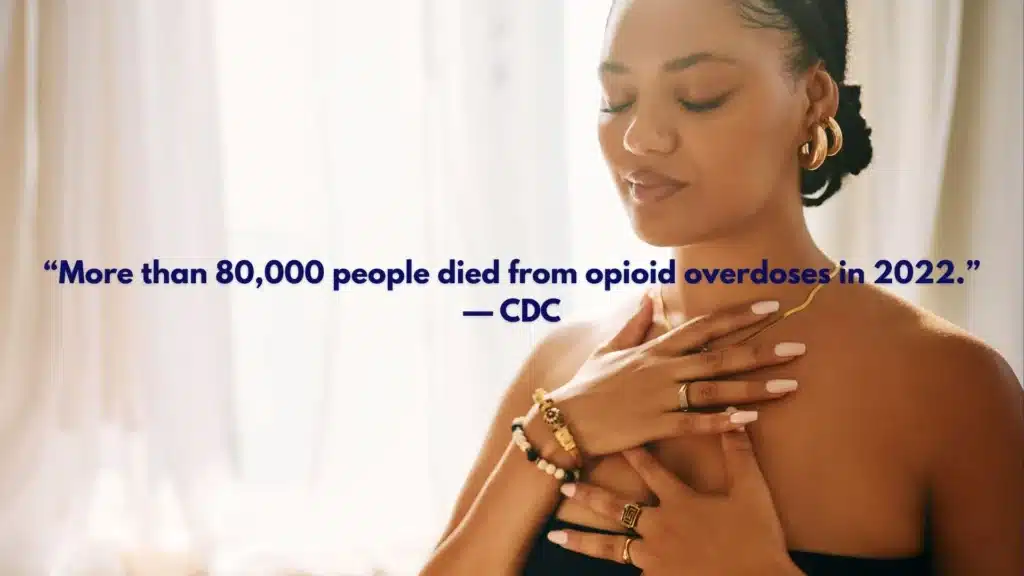
Opioid overdose remains a leading cause of preventable death in the United States, cutting across age, income, and geography. Fentanyl and other high‑potency synthetic opioids now drive most fatalities. Even small amounts, especially when mixed into non‑opioid street drugs, can rapidly stop breathing.
Rolling Hills Recovery Center sees this reality daily in New Jersey: overdoses happen to people with years of tolerance and to those just returning from abstinence after detox, treatment, or jail.
How opioids and their effects cause harm is straightforward but urgent. Opioids activate receptors in the brain and brainstem, slowing the central nervous system (CNS). As the dose increases, this depresses the drive to breathe, leading to slow, shallow, or no respirations. Carbon dioxide rises, oxygen falls, and the person becomes unresponsive. Without oxygen, brain injury occurs within minutes.
Common myths still delay life‑saving action:
- “They’ll sleep it off.” Deep, unresponsive “sleep,” especially with slow or noisy breathing, is a medical emergency, not rest.
- “Naloxone will make it worse if it’s not opioids.” Naloxone is very safe. If opioids aren’t involved, giving it does not harm.
- “Only heroin users overdose.” Any opioid, including pain pills, methadone, buprenorphine, counterfeit tablets, or contaminated cocaine, can suppress breathing. Fentanyl contamination is common.
- “One spray is enough for fentanyl.” High‑potency opioids often require repeated dosing every 2–3 minutes until breathing improves.
Opioid overdose is both a health event and a moment to connect someone with care. Immediate response saves a life; timely treatment afterward can save a future.
Recognition & Red Flags
What an Opioid Overdose Looks Like
Early recognition prevents cardiac arrest. Key red flags include:
- Unresponsive or hard to wake, does not respond to a loud voice or a firm sternal rub
- Slow or no breathing; shallow breaths; long pauses between breaths
- Pinpoint pupils (very small), though this can vary with polysubstance use
- Gurgling, snoring, or choking sounds (the “death rattle”) indicate airway obstruction
- Blue or gray lips, nails, or skin; cool or clammy skin; limp body
Check responsiveness and breathing first. If there’s no response to a loud voice or firm touch, and breathing seems slow, shallow, or absent, treat it as an overdose and act.
How to Quickly Assess
A rapid approach any bystander can follow:
- Speak loudly and shake the shoulder. If no response, perform a brief sternal rub with knuckles.
- Look, listen, & feel for breathing. Watch the chest for movement, listen at the mouth, and feel for air against the cheek for up to 10 seconds.
- If not breathing or breathing is very slow/shallow, call 911 immediately. Put the phone on speaker.
- Administer naloxone and start rescue breathing. If there is no pulse, begin CPR.

Even if the person used in a different room, follow the same steps. Quick help is better than perfect certainty.
Who is at Highest Risk, and Why
Some situations carry a sharply higher risk:
- After a period of abstinence, tolerance drops within days to weeks after detox, residential rehab, hospitalization, or incarceration. A “usual” dose can become toxic.
- Mixing opioids with sedatives or alcohol. Benzodiazepines, gabapentin, barbiturates, and alcohol all depress the CNS. Combined with opioids, they multiply overdose risk.
- Variable street potency. The illicit supply is unpredictable; fentanyl analogs vary widely in strength. Even familiar sources change.
- Xylazine adulteration. Xylazine (a sedative) is increasingly mixed into opioids in the Northeast, including New Jersey. It can cause:
- Prolonged sedation that does not fully respond to naloxone
- Severe skin wounds and slow healing, often on arms or legs
- Low blood pressure and low heart rate. Although naloxone does not reverse xylazine, it still must be given because opioids are commonly present. Airway support and rescue breathing remain critical.
Immediate Actions (Practical)
A Step‑by‑Step Response Plan Any Bystander Can Use
- Ensure scene safety. Check surroundings for hazards (needles, traffic, aggressive bystanders). Put on gloves if available.
- Call 911. Say “possible opioid overdose, not breathing,” so EMS brings naloxone and airway support. Use speakerphone to keep your hands free.
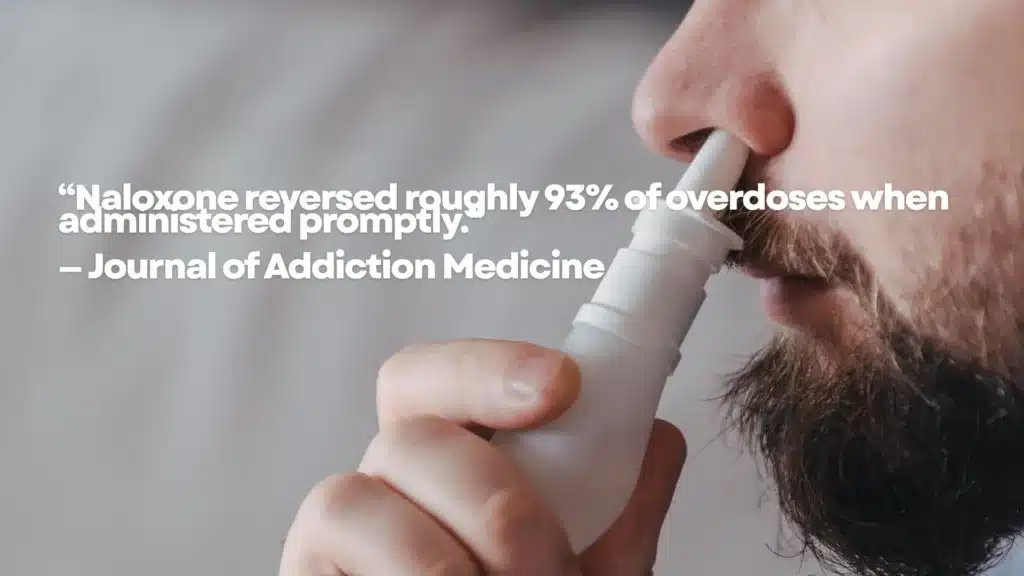
- Give naloxone right away.
- Intranasal spray: Insert the nozzle fully into one nostril; press the plunger once.
- Intramuscular (IM): Inject into the mid‑outer thigh (through clothing if necessary).
- Provide rescue breathing if the person is not breathing or is breathing poorly. One breath every 5–6 seconds for adults. Tilt the head back, lift the chin, pinch the nose, make a seal, and give gentle breaths until the chest rises.
- If there is no pulse, start CPR. Push hard and fast in the center of the chest (100–120 compressions per minute). If trained and able, use 30 compressions then 2 breaths; if not, do hands‑only compressions until help arrives or the person moves.
- Repeat naloxone every 2–3 minutes if there is no response or if breathing does not improve, especially when fentanyl is suspected. Alternate nostrils with each intranasal dose.
- Stay until EMS arrives. Monitor breathing. If the person wakes and is agitated, explain that naloxone can cause brief withdrawal, nausea, chills, aches, but it will pass. Encourage them to go to the hospital; effects can wear off, and breathing may worsen again.
Important notes:
- Naloxone is safe to give even if the overdose cause is uncertain. It does not worsen non‑opioid overdoses.
- Many states, including New Jersey, have Good Samaritan protections that shield those who call 911 in an overdose emergency. The Overdose Prevention Act in NJ encourages calling for help without fear of minor possession charges.
- If xylazine is suspected (unusually prolonged sedation, visible skin wounds), continue airway support and rescue breathing even if naloxone appears to have little effect. EMS can provide additional care.
Naloxone Formats: What to Carry and How They Differ
Having naloxone within reach changes outcomes. Anyone at risk, and those around them, should keep it available at home, work, and in a bag. In many states, including New Jersey, intranasal naloxone can be purchased over the counter.
| Form | Typical dose | How it’s used | Pros | Watch‑outs |
|---|---|---|---|---|
| Intranasal spray (OTC 4 mg) | 1 spray (4 mg) in one nostril; repeat every 2–3 minutes as needed | No assembly; insert nozzle fully, press plunger | Easy to use; widely available; no needles | Can clog if nostrils are very congested; may need multiple sprays with fentanyl |
| Prefilled intranasal (Rx 8 mg) | 1 spray (8 mg); may repeat every 2–3 minutes | Higher‑dose spray for suspected high‑potency exposure | Useful in heavy fentanyl settings | Higher dose may increase brief withdrawal symptoms |
| Intramuscular (vial/syringe) | 0.4–2 mg IM; repeat every 2–3 minutes | Higher doses may increase brief withdrawal symptoms | Inexpensive; reliable absorption | Requires needle; some training helpful; keep syringes sterile |

Whatever format is carried, practice the steps beforehand. Keep naloxone at room temperature, away from direct sunlight. Check expiration dates; most devices remain effective for years, and in a crisis, an expired dose is better than no dose.
Rescue Breathing Basics
For an opioid overdose, oxygen is life. Rescue breathing buys time while naloxone works and EMS responds. If a barrier device is available, use it; if not, giving breaths is still recommended.
Steps:
- Lay the person on their back. Clear the mouth of visible debris.
- Tilt the head back and lift the chin to open the airway.
- Pinch the nose closed. Take a normal breath & make a seal over their mouth.
- Give one steady breath over one second, watch the chest rise.
- Continue one breath every 5–6 seconds (about 10–12 breaths per minute).
- If vomiting occurs, roll the person onto their side (recovery position), clear the airway, and resume.
Naloxone may take 2–3 minutes to kick in; continue rescue breaths the whole time. If the person begins to breathe more regularly on their own, stop breathing for them and monitor.
Treatment and Follow‑Up
Emergency medical evaluation after revival is strongly recommended, even if the person feels “fine.” The effects of naloxone can wear off in 30–90 minutes, while some opioids, especially long‑acting ones or fentanyl analogs, can last longer. “Renarcotization,” or return of overdose symptoms, is dangerous and unpredictable.
In the emergency department (ED), care typically includes:
- Oxygen and airway support; inhaled oxygen or bag‑valve ventilation as needed
- Monitoring of breathing rate, oxygen saturation, and mental status
- Additional naloxone if required; IV access for fluids or medications
- Observation for several hours to ensure stable breathing
- Evaluation for co‑ingestants (alcohol, benzodiazepines), injury, or aspiration
Healthcare teams should use this moment to initiate medications for opioid use disorder (MOUD), which greatly lowers the risk of future overdose and improves retention in recovery care.
Medications for Opioid Use Disorder: What To Expect
- Buprenorphine (Suboxone and related products)
- Partial opioid agonist that eases cravings and withdrawal while blocking stronger opioids at the receptor.
- Can be started in the ED once mild opioid withdrawal signs begin (Clinical Opiate Withdrawal Scale, COWS, typically 8+).
- Strong evidence for reducing overdose deaths and improving long‑term outcomes.
- Daily dosing; extended‑release injections (monthly) are available.
- Methadone
- Full agonist given through certified opioid treatment programs.
- Very effective for severe opioid use disorder, including those with high fentanyl exposure.
- Daily in‑clinic dosing at first, with take‑home doses earned over time. Requires careful coordination, but outcomes are excellent when retained in care.
- Naltrexone (oral or monthly injection)
- Opioid antagonist that blocks the effects of opioids. Best for those who can maintain full abstinence from opioids for 7–10 days before starting.
- Not a fit immediately after overdose unless a period of opioid‑free time has already been achieved.
- Useful for motivated patients with strong support and lower physiologic dependence.
At Rolling Hills Recovery Center, clinicians integrate MOUD with behavioral therapies, family involvement, & holistic supports (sleep, nutrition, stress reduction), which together sustain change. Individuals who are ready for structured care can explore rehab for opioid addiction in New Jersey to stabilize quickly and build a routine with evidence‑based treatment.
Observation and Safety After Discharge
For those treated with naloxone and discharged:
- Avoid using any substances for at least 24 hours. The risk of reactivation, especially after long‑acting opioids or fentanyl, is real.
- Keep take‑home naloxone at bedside. Train a trusted friend or family member how to use it.
- Know local Good Samaritan protections. In New Jersey, bystanders are encouraged to call for help; minor drug possession is generally protected when seeking medical care for an overdose.
- Schedule a prompt follow‑up with an MOUD‑capable provider or program. The first 24–72 hours after an overdose is the window where motivation and risk are both high.
If repeated overdoses, withdrawal cycles, or unstable housing are present, a higher level of care may be indicated. Rolling Hills Recovery Center offers coordinated transitions from detox to residential and outpatient treatment so that momentum is not lost between levels of care.
Family Education and Support
Families and loved ones often witness the earliest warning signs. They should be included in safety planning:
- Learn to recognize overdose and practice naloxone use together.
- Store multiple naloxone kits: home, work, backpack, car glove box. Replace after use.
- Agree on a no‑questions‑asked plan to call 911. Keep the address and key entry details handy.
- When ambivalence about change is high, simple steps still help: safer use practices, overdose prevention strategies, and a standing appointment with a treatment provider.
How Rolling Hills Recovery Center Can Help After an Overdose
After stabilization, the focus shifts to preventing the next crisis and building a sustainable recovery plan. The Rolling Hills approach blends:
- Evidence‑based treatments (buprenorphine coordination, contingency management, cognitive behavioral therapy, relapse prevention training)
- Trauma‑informed care and mental health support (depression, anxiety, PTSD commonly co‑occur)
- Holistic supports: nutrition, physical activity, mindfulness, and family sessions
- Practical recovery capital: transportation, employment or school planning, and community linkage
The team also prioritizes safety:
- Take‑home naloxone for the patient & family
- Education on mixing risks (alcohol, benzodiazepines)
- Harm reduction tools such as fentanyl test strips and safer use plans for those not yet ready for abstinence
- A written crisis plan, with 24/7 contacts and clear steps if use or overdose recurs
For individuals questioning whether substances are making life unmanageable, a compassionate assessment can clarify options; see signs that drugs and alcohol are making life unmanageable to start the conversation.
Prevention and Harm Reduction
Overdose prevention is practical. It balances readiness for treatment with steps that lower risk right now. Whether someone is working toward abstinence or not, these actions save lives:
- Avoid using alone. If alone, consider a virtual spotter who can call 911 if unresponsive; some communities use designated phone lines or apps. If with others, take turns, not simultaneously.
- Test dose first. Start with a very small amount to gauge strength. The illicit supply is inconsistent, particularly with fentanyl contamination.
- Never mix opioids with alcohol or benzodiazepines. If prescribed benzodiazepines, discuss tapering and risk management with a clinician. Avoid gabapentin or sedating antihistamines together with opioids.
- Use fentanyl test strips (FTS). Many New Jersey programs provide FTS free or at a low cost. Positive FTS should prompt extra caution (smaller dose, do not mix, do not use alone).
- Check tolerance after a break. After detox, rehab, hospitalization, or jail, or even a few days off, assume tolerance has dropped.
- Keep naloxone close. Store multiple kits and teach friends/family. Replace used kits immediately. OTC access has expanded; pharmacies and community programs can help.
- Use clean supplies. New syringes reduce infection risk and prevent skin/soft‑tissue complications. Never share injection equipment. Consider safer alternatives (smoking supplies) to avoid injecting.
- Store opioids in a lockbox and dispose of unused medication properly. DEA Take Back Days, pharmacy disposal kiosks, and police stations are common options.
- Know local services. Community syringe programs, mobile outreach, and bridge clinics often offer same‑day MOUD starts, safer‑use education, and wound care for xylazine‑related skin issues.
- Write a simple safety plan. Include a relapse warning list (stressors, triggers), go‑to coping skills, emergency contacts, and where naloxone is kept.

These steps do not require perfection. They reduce risk today while longer‑term treatment plans are put in place.
Helpful Resources
- CDC opioid overdose: data, prevention basics, resources for families and clinicians
- NIDA opioids: science of addiction, treatment effectiveness, and current research
- SAMHSA overdose prevention: national helplines, harm reduction, and treatment locator
- FDA naloxone: how naloxone works, product types (including OTC), and safety information
Healthcare professionals and families in New Jersey can layer these resources with local access to MOUD, community naloxone programs, and coordinated care at Rolling Hills Recovery Center to close the gap between overdose and lasting recovery.
Conclusion
Acting fast saves lives. Know the signs & what to do: call 911, give naloxone, then rescue breathing, stay until help arrives. Avoid mixing drugs and reassess tolerance after any break. Next, seek ongoing, evidence-based care.
Frequently Asked Questions (FAQs)
What are the Most Common Signs of an Opioid Overdose?
Key signs of an opioid overdose include slow, shallow, or stopped breathing; extreme sleepiness or unresponsiveness; pinpoint pupils; blue or gray lips and nails; gurgling or snoring sounds; and cool, clammy skin. If opioid overdose is suspected, call 911 immediately. Fast breathing support and naloxone can save a life.
What Should Be Done First During a Suspected Opioid Overdose?
During a suspected opioid overdose, call 911 right away, then give naloxone (nasal spray or injection) if available. If the person isn’t breathing, provide rescue breaths; if there is no pulse, start CPR. Stay with the person. If there’s no response, repeat naloxone every 2–3 minutes until help arrives. Good Samaritan laws often protect callers.
Does Naloxone Work for an Opioid Overdose Involving Fentanyl or Xylazine?
Naloxone reverses an opioid overdose from fentanyl as well as other opioids, but stronger opioids may need more than one dose. If xylazine is present, naloxone won’t fix xylazine’s effects, yet it should still be given because opioids are usually involved. Keep supporting breathing u0026amp; airway until EMS arrives, oxygen and monitoring matter.
Who is at Higher Risk for Opioid Overdose, and How Can it Be Reduced?
Risk for opioid overdose rises after a break in use (reduced tolerance), when opioids are mixed with alcohol or benzodiazepines, when using alone, or with lung or heart disease. To lower risk: avoid mixing drugs, use a small test dose, don’t use alone if possible, carry naloxone, and reassess dose after any period of abstinence.
How Can Rolling Hills Recovery Center Help After an Opioid Overdose in New Jersey?
Rolling Hills Recovery Center is a drug and alcohol rehab and addiction treatment center in New Jersey that offers evidence-based addiction treatment and holistic approaches after an opioid overdose. The team provides medical assessment, medication for opioid use disorder when appropriate, therapy, family support, and wellness services.