

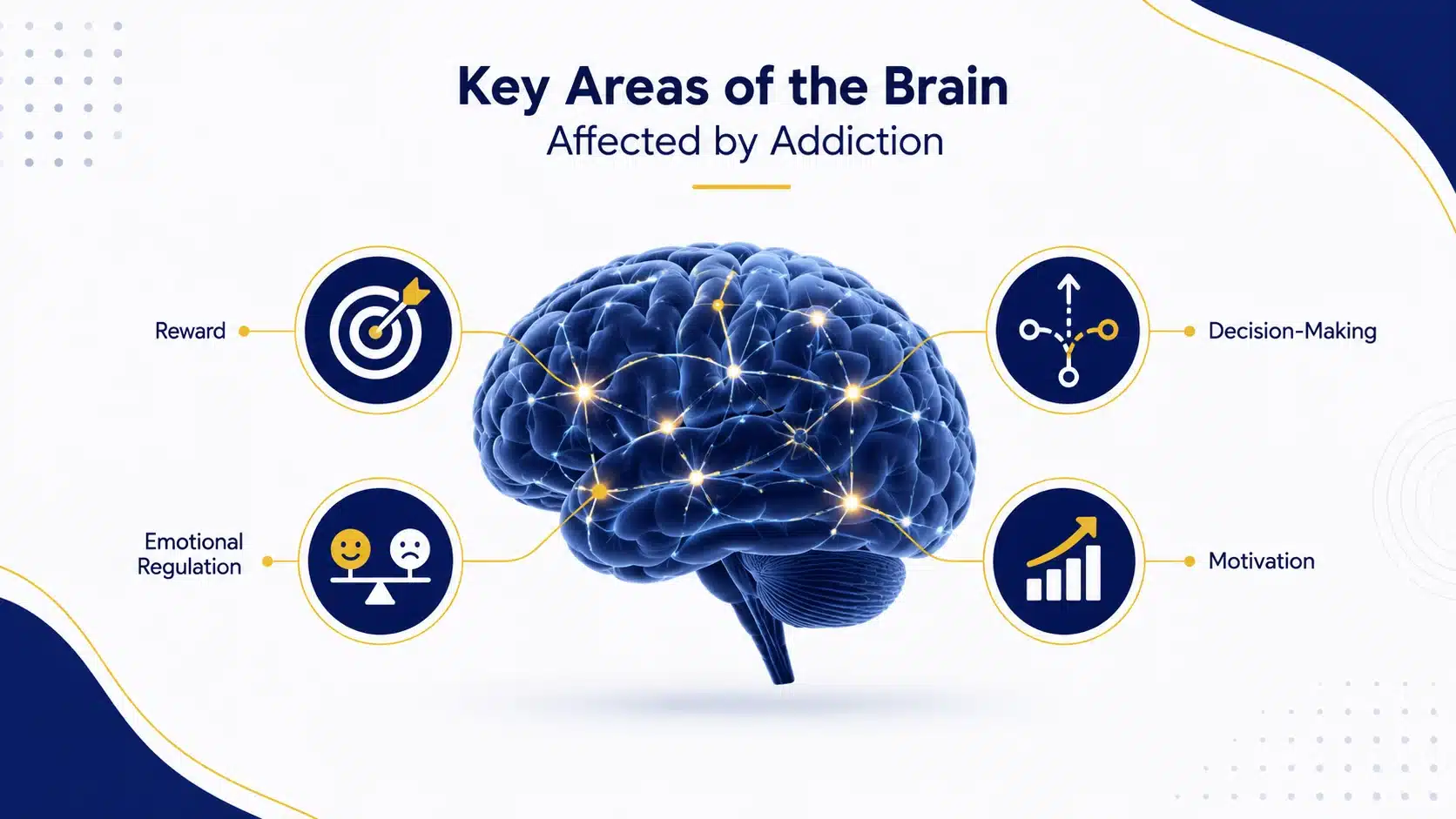
Addiction is a chronic condition that affects how the brain functions, influencing far more than a person’s behavior or willpower. Repeated substance use can alter the way brain cells communicate, affecting areas involved in motivation, decision-making, emotional regulation, and reward. Over time, these changes can make it increasingly difficult to stop using substances despite negative consequences.
Many of the behavioral and physical changes associated with addiction may first appear as subtle symptoms, often overlapping with some of the most common warning signs of a substance use disorder. Understanding what is happening inside the brain can provide important context for why these signs develop and how substance use disorders can progress over time.
The Brain’s Reward System and Why It Matters
How the Reward System Works
The brain’s reward system helps reinforce behaviors that support survival and overall well-being. Activities such as eating, exercising, spending time with loved ones, or achieving a goal can trigger the release of dopamine, a neurotransmitter involved in motivation, pleasure, and learning.
Rather than simply creating feelings of enjoyment, dopamine helps the brain recognize rewarding experiences and encourages those behaviors to be repeated.
According to Cleveland Clinic’s overview of dopamine, this neurotransmitter plays an important role in motivation, reward, and reinforcement. These natural reward pathways help guide everyday decisions and encourage behaviors that contribute to health and well-being.
Why Substances Can Override Natural Rewards
Alcohol and other substances can affect the brain’s reward system by producing dopamine responses that are often more intense and immediate than those triggered by many everyday activities.
While natural rewards create balanced and temporary increases in dopamine activity, substance use can cause larger surges that the brain begins to associate with reward and reinforcement. As a result, the brain may begin prioritizing substance use over activities that once felt meaningful or enjoyable.
Over time, these changes can reduce the appeal of natural rewards while strengthening the desire to use substances. This shift may contribute to continued substance use despite negative consequences and helps explain why addiction involves measurable changes in brain function rather than a simple lack of willpower.

Changes in Decision-Making and Self-Control
The Role of the Prefrontal Cortex
The prefrontal cortex is the area of the brain responsible for many higher-level cognitive functions, including judgment, planning, problem-solving, and impulse control. It helps individuals evaluate situations, weigh potential consequences, and make decisions that align with their long-term goals. This region also plays an important role in regulating emotions and resisting urges that may be harmful or counterproductive.
When functioning properly, the prefrontal cortex helps balance immediate desires with future outcomes. It allows people to pause, consider alternatives, and make thoughtful decisions rather than acting solely on instinct or impulse. Because of its role in self-regulation and decision-making, the prefrontal cortex is a key part of understanding how addiction can affect behavior over time.
Why Decision-Making Becomes More Difficult
Repeated substance use can influence how the prefrontal cortex functions, making it more difficult to evaluate risks, control impulses, and make sound decisions. As changes occur within the brain’s reward and decision-making systems, individuals may become increasingly focused on substance use despite experiencing negative consequences.
These changes can affect how choices are prioritized, causing immediate rewards to take precedence over long-term goals. Over time, this shift may contribute to continued substance use even when an individual recognizes its impact on their health, relationships, or overall well-being.

Why Cravings Become So Powerful
Triggers and Learned Associations
Cravings are often influenced by learned associations that develop over time. When substance use is repeatedly connected to certain people, places, emotions, or routines, the brain begins linking those experiences together. A social setting, stressful event, or specific time of day can become associated with substance use. As these connections strengthen, exposure to a trigger may prompt memories and urges related to past substance use, even when an individual is committed to recovery.
The Brain’s Response to Cravings
Cravings can persist long after substance use has stopped because the brain retains many of the pathways formed during active addiction. Exposure to triggers may activate areas of the brain involved in memory, motivation, and reward, creating a strong urge to use substances. Although cravings often become less frequent and intense over time, they can still occur during periods of stress, emotional distress, or exposure to environments linked to previous substance use.
The persistence of cravings does not necessarily indicate a lack of progress in recovery. Rather, it reflects the lasting impact that addiction can have on the brain’s learning and reward systems. Understanding cravings is often an important part of long-term recovery, particularly when individuals are developing coping strategies and building healthier routines through structured support such as outpatient treatment programs. Recognizing common triggers and learning how to respond to them can help support long-term recovery goals while reducing the likelihood of returning to substance use.

Can the Brain Recover After Addiction?
The Brain’s Ability to Adapt
One of the brain’s most remarkable characteristics is its ability to adapt and change over time. This process, known as neuroplasticity, allows the brain to form new connections and adjust in response to new experiences and behaviors. Although addiction can affect areas of the brain involved in reward, motivation, and decision-making, the brain remains capable of adapting throughout life.
Understanding brain plasticity in addiction helps explain why recovery can support healthier brain function over time. As individuals reduce or stop substance use and adopt healthier habits, the brain can begin strengthening pathways that support long-term recovery.
Recovery Takes Time
Recovery does not occur at the same pace for everyone. The healing process can be influenced by factors such as the type of substance used, duration of use, overall physical health, and the presence of co-occurring mental health conditions. Some individuals may notice improvements in mood, sleep, concentration, or emotional regulation within weeks or months, while other changes may take longer.
As the brain adjusts to life without substances, challenges such as cravings, stress, or emotional fluctuations may still occur. These experiences are often a normal part of recovery and do not necessarily indicate a setback. With time, consistency, and appropriate support, many individuals experience meaningful improvements in brain function and overall well-being.

When Professional Support May Be Helpful
Recognizing the Need for Additional Help
While many people are able to make positive changes on their own, there are times when additional support may be beneficial. Ongoing cravings, persistent withdrawal symptoms, or repeated unsuccessful attempts to stop using substances can indicate that the brain and body have become increasingly dependent on substance use. In these situations, professional care can provide the structure, guidance, and evidence-based support needed to navigate recovery safely and effectively.
It is also important to recognize that addiction can affect more than physical health. Difficulties at work or school, strained relationships, changes in mood, and a growing focus on obtaining or using substances may all be signs that additional intervention is warranted. Seeking help is not a sign of weakness; rather, it is a proactive step toward addressing a complex health condition.
For individuals experiencing these challenges, addiction treatment programs provide personalized support that addresses both the physical and psychological aspects of addiction. Early intervention may help reduce the risk of further complications while supporting long-term recovery and overall well-being.
Understanding the Impact of Addiction on the Brain
Addiction affects multiple areas of the brain, influencing how people experience reward, motivation, emotions, and decision-making. These changes can contribute to cravings, altered behavior patterns, and difficulty stopping substance use despite negative consequences. While addiction can have a significant impact on brain function, recovery remains possible.
Through the brain’s ability to adapt and form new pathways, many individuals experience meaningful improvements over time. Understanding these changes can provide valuable insight into addiction as a complex health condition and the recovery process that follows.
Frequently Asked Questions
How Does Addiction Affect the Brain?
Addiction can alter the way the brain processes reward, motivation, memory, and decision-making. Repeated substance use may change communication pathways within the brain, reinforcing behaviors associated with substance use and making it more difficult to stop despite negative consequences.
Can Brain Damage From Addiction Be Reversed?
The effects of addiction on the brain vary depending on several factors, including the substance used and the duration of use. While some changes may persist, the brain's ability to adapt through neuroplasticity can support improvements in cognitive function, emotional regulation, and overall well-being during recovery.
Why Do Cravings Continue After Someone Stops Using Substances?
Cravings can continue because the brain retains many of the learned associations connected to substance use. Exposure to certain environments, emotions, or situations may trigger memories and reward pathways that create urges, even after a person has stopped using substances.
How Long Does it Take the Brain to Recover from Addiction?
There is no universal timeline for recovery. The healing process can vary based on the substance involved, frequency of use, overall health, and individual circumstances. Some improvements may occur within weeks or months, while other changes can take longer to develop.
Does Addiction Affect Decision-Making?
Yes. Addiction can influence areas of the brain involved in judgment, impulse control, and planning. As these changes develop, individuals may find it more difficult to evaluate risks, resist urges, and make decisions that support their long-term health and well-being.