

Selecting the right program length is based on a thorough clinical evaluation rather than a predetermined timeline. During the admissions process, licensed professionals consider factors such as medical history, substance use patterns, mental health, previous recovery experiences, relapse history, and personal goals before making a recommendation. For some individuals, a 90-day rehab program may provide the additional time and structured support needed to build a stronger foundation for long-term recovery.
Why Program Length Is Based on an Individualized Evaluation
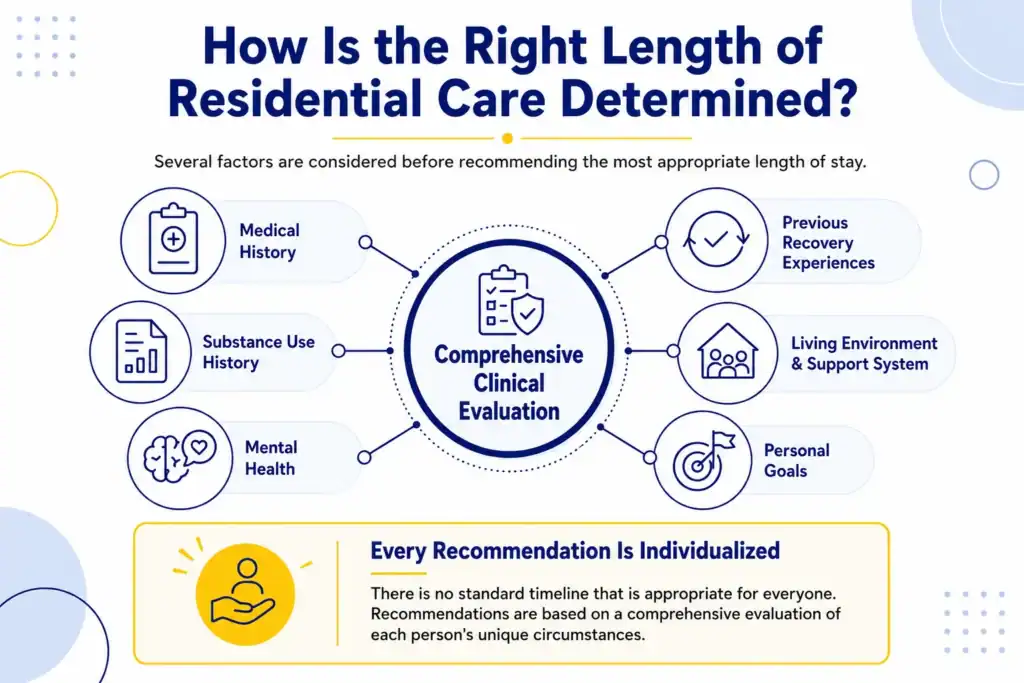
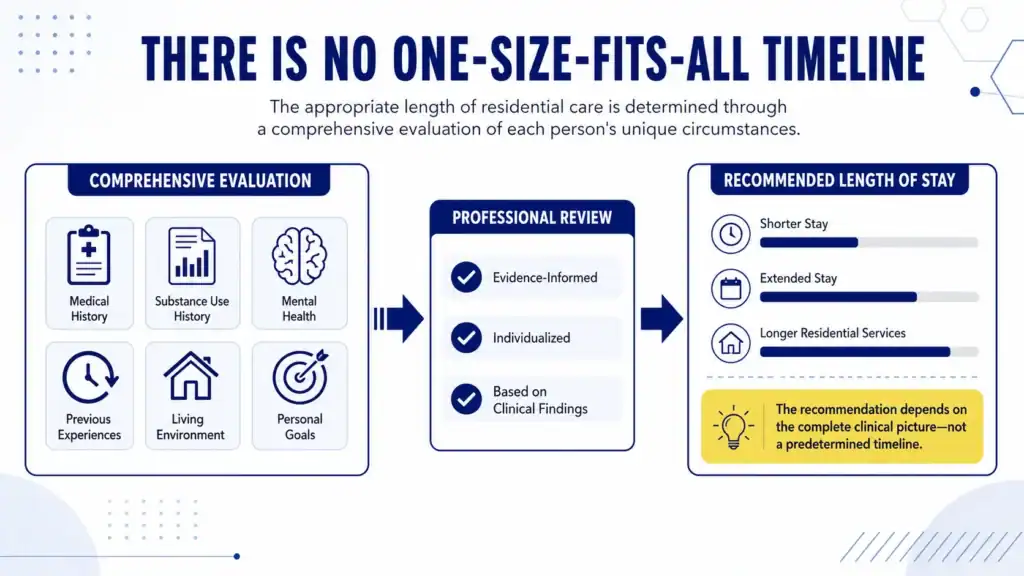
There is no standard timeline that is appropriate for every individual seeking help for substance use. While some people make meaningful progress during a shorter stay, others may benefit from additional time to address medical concerns, mental health conditions, or environmental factors that can influence long-term outcomes. The goal is to recommend the level and duration of care that best reflects each person’s unique circumstances.
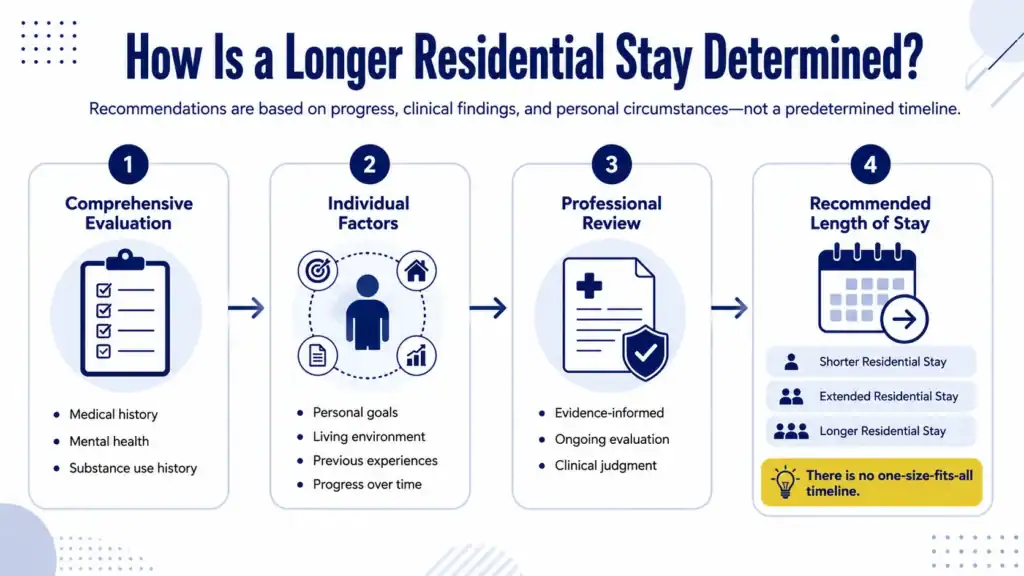
The admissions process is designed to develop a complete understanding of an individual’s situation before any recommendations are made. Information such as substance use history, overall health, previous care experiences, living environment, support system, and personal goals all contribute to determining the most appropriate path forward. Rather than relying on a predetermined timeline, licensed professionals use this information to make evidence-informed recommendations based on clinical need.
This decision-making process combines professional expertise with established best practices to identify the most appropriate level of support. Because every situation is different, no single length of stay is right for everyone.
For some individuals, additional time in a structured residential setting may provide greater opportunity to develop healthy routines, address underlying challenges, and prepare for the transition back to daily life. Ultimately, the recommended length of care should reflect the individual’s needs, progress, and overall clinical picture rather than a fixed number of days.
Factors Considered When Recommending a 90 Day Rehab Program
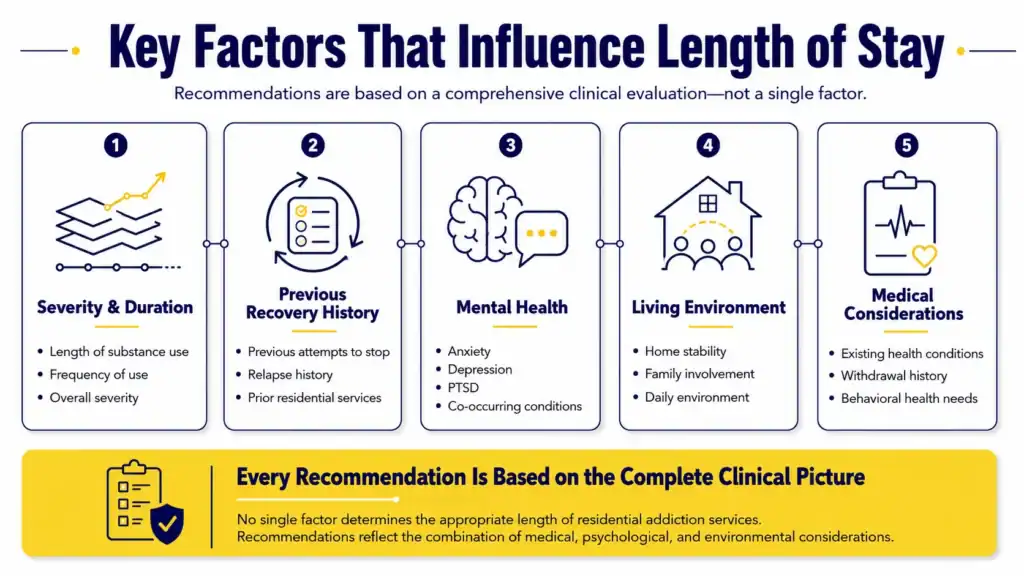
The length of a residential stay is determined by evaluating the full clinical picture rather than any single circumstance. Licensed professionals review a combination of medical, psychological, and environmental factors to determine the most appropriate path forward. The following considerations often help guide decisions about whether a longer stay may be beneficial.
Severity and Duration of Substance Use
The type of substance involved, frequency of use, and length of time substance use has occurred can all influence the recommended length of stay. Individuals with a long history of substance use or significant physical and psychological effects may benefit from additional time in a structured environment to establish stability and develop healthier coping strategies.
History of Relapse or Previous Services
Previous attempts to stop using alcohol or drugs can provide valuable insight into what level of structure may be most beneficial. Multiple relapses or prior episodes of addiction services may suggest that extending the length of a residential stay offers more time to address underlying challenges and strengthen the foundation for lasting wellness.
Co-Occurring Mental Health Conditions
Mental health conditions such as anxiety, depression, post-traumatic stress disorder (PTSD), or bipolar disorder often occur alongside substance use disorders. Addressing both concerns together is an important part of developing an effective plan. Learning more about starting dual diagnosis treatment in New Jersey can provide additional insight into how integrated behavioral health services help address both conditions simultaneously.
Recovery Environment and Support System
Life outside of residential services also plays an important role in determining the appropriate length of stay. Returning to an unstable home environment, limited family involvement, or situations where substance use is common may indicate that additional time in a structured setting could provide greater preparation before returning to everyday responsibilities.
Medical or Behavioral Health Needs
Existing medical conditions, withdrawal history, and behavioral health concerns are also considered when determining the most appropriate course of action. Some situations require ongoing monitoring, coordinated medical services, or additional therapeutic interventions before transitioning to the next phase of the healing process.
What Happens During the Admissions Evaluation?
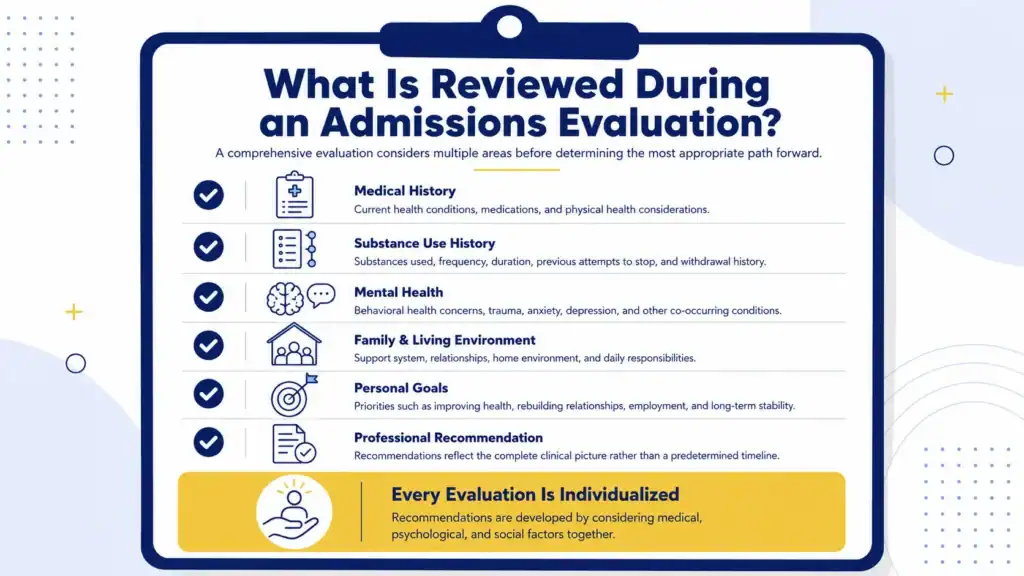
Before any recommendations are made, licensed professionals complete a comprehensive review to better understand the factors that may influence the most appropriate course of action. A comprehensive evaluation for substance use disorders considers medical, psychological, and social factors together rather than relying on a single concern or symptom.
The evaluation typically begins with a review of medical history, including current health conditions, medications, and any physical concerns that could influence the first stages of residential services. A discussion about substance use follows, focusing on the types of substances involved, frequency of use, duration, previous attempts to stop, and any history of withdrawal.
Mental health is also an important part of the conversation. Conditions such as anxiety, depression, trauma, or other behavioral health concerns may influence both the recommended level of services and the overall approach. Family relationships, living environment, employment, and other social factors are also reviewed to better understand potential strengths and challenges following discharge.
Finally, personal goals help shape the overall plan. Whether the focus is rebuilding family relationships, improving physical health, returning to work, or establishing long-term stability, these priorities help guide recommendations that reflect the person’s unique circumstances rather than a predetermined timeline.
Why More Time Can Be Beneficial for Some Individuals
The amount of time spent in residential services should reflect a person’s unique circumstances rather than a predetermined timeline. While a shorter stay may be appropriate for some, others benefit from additional time to strengthen healthy routines, build coping skills, and address factors that contribute to substance use. Research examining residential addiction treatment outcomes suggests that longer engagement may be beneficial for some individuals, particularly when recommendations are based on clinical needs and ongoing progress.
An extended stay also provides more opportunities to participate in evidence-based therapies, explore underlying concerns such as trauma or co-occurring mental health conditions, and strengthen relapse prevention strategies before returning to everyday responsibilities. As discharge approaches, attention often shifts toward creating a plan for continued progress through outpatient services, community resources, and other ongoing support.
Rather than focusing on a specific number of days, the goal is to recommend a length of stay that reflects a person’s evolving needs, therapeutic progress, and readiness to transition to the next stage of care.
When a 90 Day Rehab Program May Be Appropriate
Determining the appropriate length of residential services is a clinical decision based on a comprehensive evaluation, personal goals, and progress over time. While some individuals achieve meaningful progress in a shorter stay, others may benefit from additional structure and therapeutic engagement before transitioning to the next phase of care.
Because every situation is different, recommendations should reflect the complete clinical picture rather than a predetermined number of days. For those interested in understanding what a longer residential stay involves, the 90 Day Rehab Program in New Jersey provides additional information about the structure, services, and admissions process associated with this level of care.
Frequently Asked Questions
How is the Length of a Rehab Program Determined?
The recommended length of stay is based on a comprehensive evaluation of several factors, including substance use history, overall health, mental health, previous attempts to stop using substances, living environment, and personal goals. Licensed professionals consider the complete clinical picture before determining the most appropriate course of action.
Does Everyone Need a 90-Day Rehab Program?
No. There is no standard length of stay that is appropriate for everyone. Some individuals may benefit from a shorter residential stay, while others may require additional time based on medical, psychological, or environmental factors identified during the admissions evaluation.
Can Recommendations Change After Admission?
Yes. Recommendations are reviewed throughout the residential stay and may be adjusted as progress is made or new needs are identified. Ongoing evaluations help ensure the approach continues to reflect current circumstances rather than relying on the original timeline alone.
Is a 90-Day Rehab Program Only Recommended for Severe Addiction?
Not necessarily. While some individuals with more complex needs may benefit from a longer residential stay, the recommendation is based on much more than the severity of substance use. Factors such as mental health, relapse history, medical concerns, and available support systems are also considered.
What Happens After Completing a 90-Day Rehab Program?
Many individuals continue with the next phase of services after leaving residential care. This may include outpatient therapy, intensive outpatient programs (IOPs), counseling, peer support groups, or other community-based resources designed to help maintain progress and provide ongoing accountability.