

A drug and alcohol assessment is a structured evaluation completed before admission to help determine the most appropriate level of care for an individual experiencing substance use concerns. During the process, licensed professionals review substance use history, physical and behavioral health, previous addiction treatment, and current life circumstances to better understand immediate needs and potential risks.
The findings help guide recommendations for services such as medical detox, residential care, or outpatient support while providing a foundation for the admissions process. Rather than relying on a diagnosis alone, an addiction assessment considers multiple factors to help inform safe, evidence-based care decisions.
Why a Drug and Alcohol Assessment is Important
A drug and alcohol assessment helps establish a clear understanding of an individual’s current situation before any recommendations are made. Substance use can affect physical health, mental health, daily functioning, and personal safety in different ways, making an evaluation an important part of the admissions process.
One of the primary goals is identifying concerns that may require immediate attention, including the risk of withdrawal symptoms, medical complications, or co-occurring disorders such as anxiety, depression, or post-traumatic stress disorder. Recognizing these factors early informs whether services such as medical detox, residential care, or outpatient support may be appropriate.
The details gathered also support evidence-based care by helping licensed professionals recommend services that reflect current needs rather than assumptions. Whether someone is considering drug rehab in New Jersey or alcohol rehab in New Jersey, a thorough evaluation provides the clinical information needed to make informed decisions about the next step in the admissions process.
Information Reviewed During a Drug and Alcohol Assessment
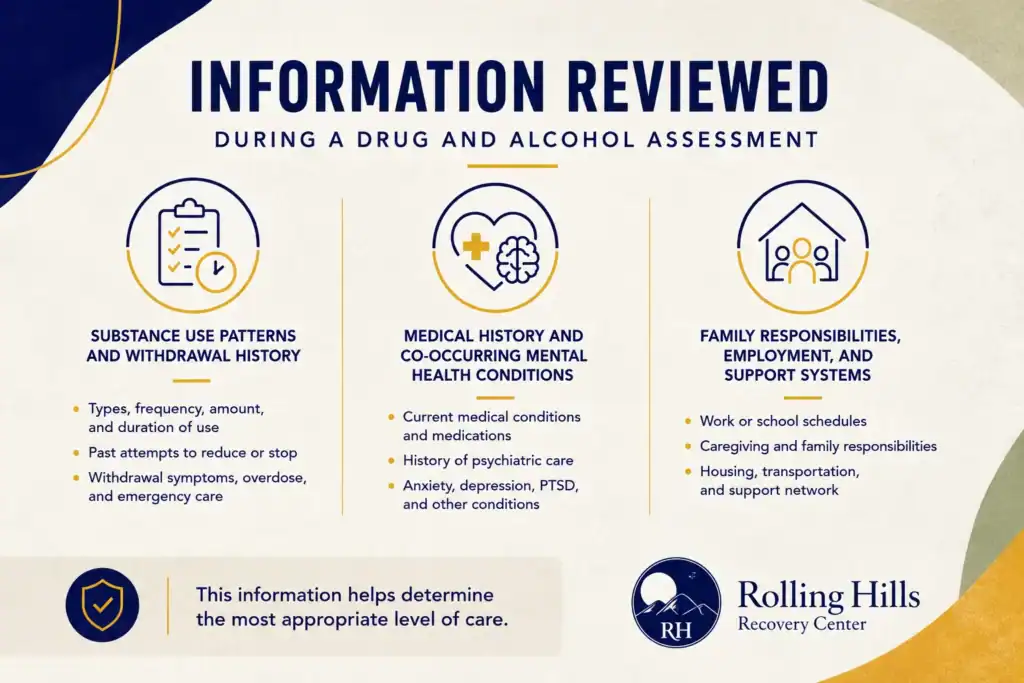
Substance Use Patterns and Withdrawal History
Understanding how substances have been used over time provides important context for the admissions process. This includes the types of drugs or alcohol involved, how often they are used, the amount typically consumed, and how long use has continued. Previous attempts to reduce or stop drug use or alcohol use are also discussed, along with any past experiences involving withdrawal symptoms, overdose, or emergency medical care. These factors are commonly gathered using validated screening methods that help identify substance use severity and guide clinical decision-making.
Medical History and Co-Occurring Mental Health Conditions
Physical and mental health information helps identify factors that may influence admission planning and ongoing services. Discussions often include current medical conditions, prescription medications, previous hospitalizations, and any history of psychiatric care. Diagnoses involving anxiety, depression, PTSD, or other mental health conditions are considered alongside substance use because they frequently occur together. Current psychiatric research supports integrated care for individuals with co-occurring disorders.
Family Responsibilities, Employment, and Support Systems
Everyday responsibilities can affect which services are realistic and appropriate. Employment schedules, caregiving responsibilities, transportation, and housing stability all influence planning before admission. Available family support or a broader support network may also affect decisions about ongoing participation and follow-up services. Understanding these circumstances helps identify practical considerations that could influence attendance, communication, and continuity of care while balancing daily responsibilities with the structure recommended during the admissions process.
Previous Addiction Treatment and Continuing Care
Previous experiences with addiction treatment can provide valuable context when determining future decisions. The clinical picture of earlier admissions, individual or group counseling, prescribed medications, and participation in continuing care may help identify approaches that were effective as well as barriers that affected long-term progress.
Past involvement in inpatient rehab, outpatient treatment, or an intensive outpatient program may also be reviewed alongside any return to substance use and relapse prevention strategies that were previously used. This broader picture helps support informed decisions about the next stage of care.
How Assessment Findings Help Determine the Appropriate Level of Care
The history collected during a drug and alcohol assessment guides which services are most appropriate based on current circumstances rather than personal preference alone. Factors such as withdrawal risk, physical health, co-occurring mental health conditions, previous experiences with substance use services, and available support all contribute to the recommendation.
For example, someone experiencing moderate to severe withdrawal symptoms may require medical detox before participating in ongoing services. Individuals who need around-the-clock monitoring, a highly structured environment, or additional support for complex medical or psychiatric concerns may be referred to residential addiction treatment or inpatient drug rehab in New Jersey.
Others who are medically stable but still benefit from frequent therapeutic support may be appropriate for a partial hospitalization program (PHP) or an intensive outpatient program (IOP), while some individuals may begin with outpatient addiction treatment when their circumstances and level of support allow.
Rather than placing everyone into the same setting, the goal is to match current needs with the recommended services most likely to promote safety, stability, and ongoing progress. As circumstances change, recommendations may also change, allowing individuals to move between different addiction treatment options as appropriate.
Preparing for Admission
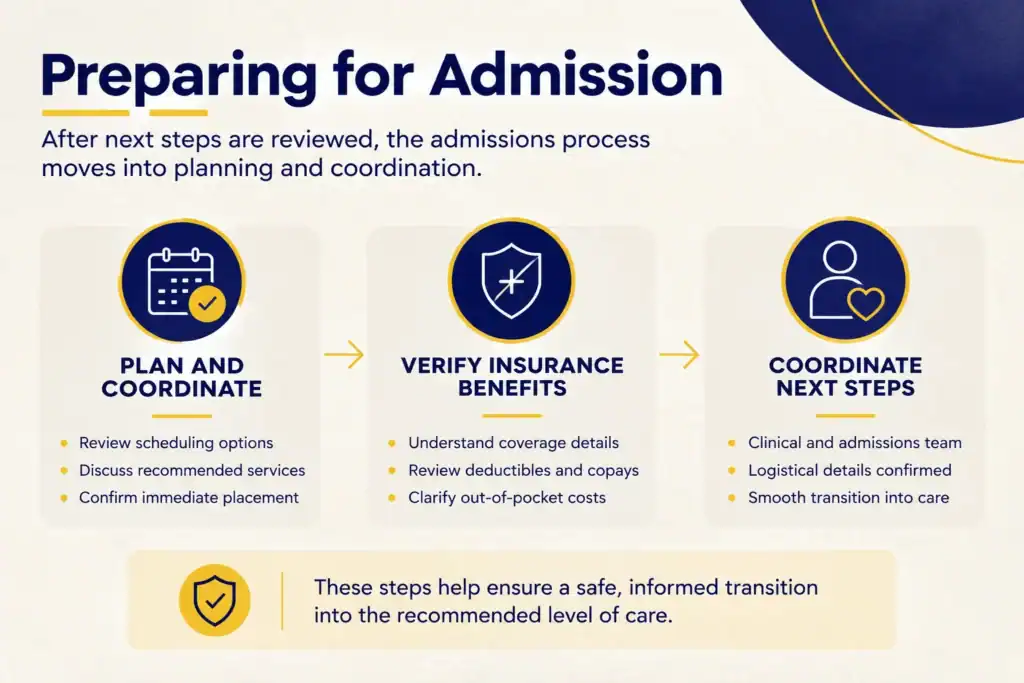
Once next steps are established and reviewed, the admissions process moves to planning and coordination. This may include discussing available scheduling options, reviewing recommended services, and confirming whether immediate placement is appropriate. In some situations, same-day admission may be available depending on clinical needs, medical stability, and program availability.
Before services begin, many individuals also choose to verify insurance benefits to better understand benefits, deductibles, copays, and other potential out-of-pocket costs. Reviewing private insurance coverage early in the admissions process can help clarify eligibility and streamline financial planning before admission is scheduled.
Coordinating these next steps allows the clinical and admissions teams to prepare for a safe transition into the recommended type of services while ensuring important logistical details have been addressed.
Making an Informed Decision
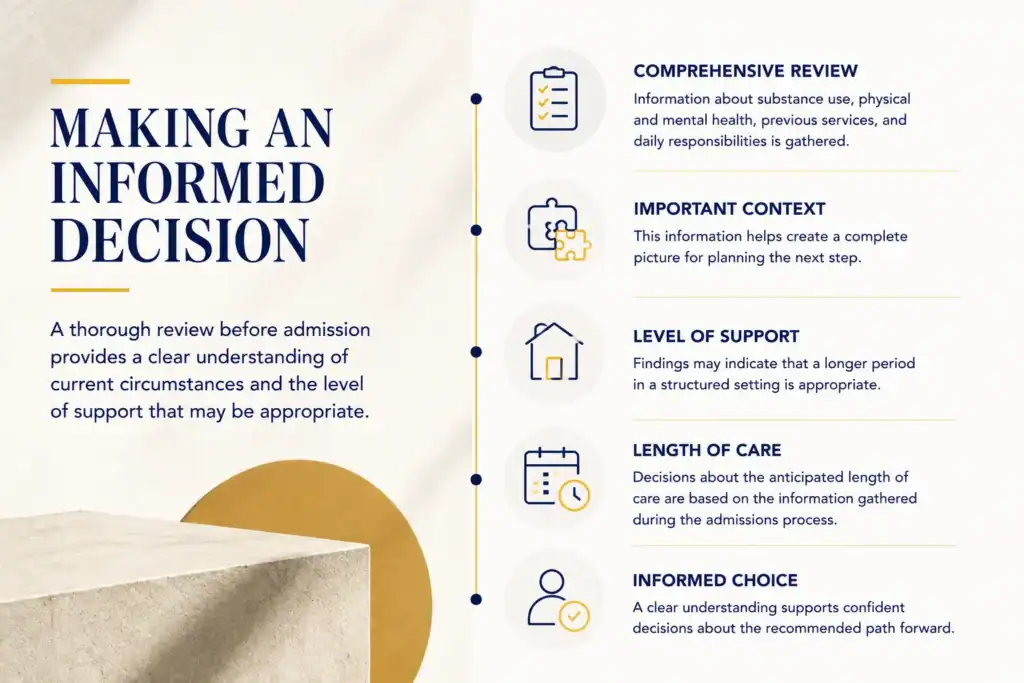
Completing a thorough review before admission helps establish a clear understanding of current circumstances and the level of support that may be appropriate. Information about substance use, physical and mental health, previous services, and daily responsibilities provides important context for planning the next step.
In some situations, the findings may indicate that a longer period in a structured setting is appropriate, particularly for individuals with more complex clinical or recovery needs. Decisions about the anticipated length of care, including longer residential treatment, are based on the information gathered throughout the admissions process.
Frequently Asked Questions
What is Included in a Drug and Alcohol Assessment?
The process typically reviews substance use patterns, withdrawal history, physical and mental health, prescription medications, previous addiction treatment, family and social support, and current life circumstances. This information helps determine the most appropriate support.
How Long Does a Drug and Alcohol Assessment Usually Take?
Most evaluations take between 60 and 90 minutes, although the length depends on the complexity of the information being reviewed, including medical history, substance use, and mental health.
Who Performs a Drug and Alcohol Assessment?
Licensed professionals with training in substance use disorders and mental health typically conduct these evaluations. Depending on the provider, this may include counselors, social workers, nurses, or other qualified clinicians.
Can Outpatient Care Be Recommended Instead of Inpatient Rehab?
Yes. Recommendations are based on individual needs, medical considerations, withdrawal risk, and available support. Some individuals may be appropriate for outpatient services or an intensive outpatient program, while others may require medical detox or inpatient rehab.