

Inpatient rehab is not the only option for structured addiction treatment. Some New Jersey adults may need the around-the-clock support of a residential setting, while others may benefit from a partial hospitalization program (PHP) or intensive outpatient program (IOP) while continuing to live at home.
The appropriate level of support depends on the individual. Substance use patterns, withdrawal risks, mental health concerns, previous recovery attempts, home environment, and daily responsibilities can all influence where someone begins.
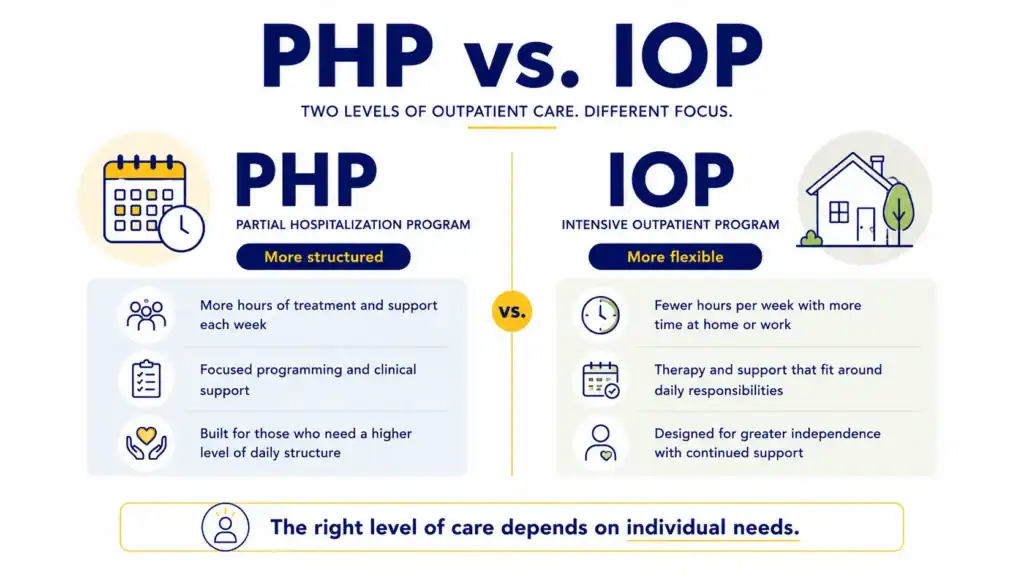
For people considering outpatient options, understanding the differences between PHP and IOP is an important first step. Both offer structured support, but they differ in time commitment, intensity, and who they suit.
What Is a Partial Hospitalization Program (PHP)?
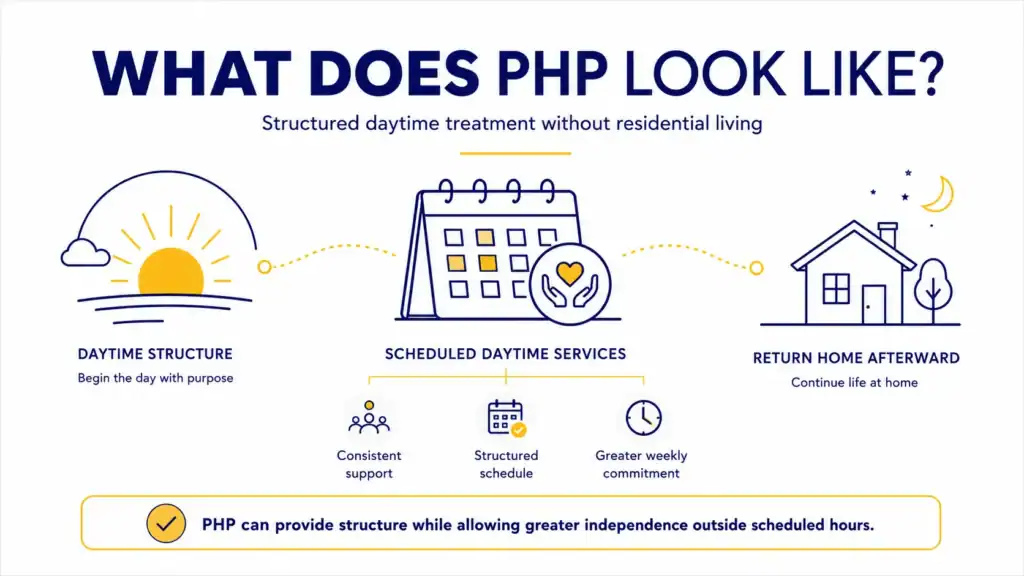
A partial hospitalization program (PHP) is a structured form of outpatient treatment for people who need more frequent services without living at a facility. Participants attend scheduled sessions during the day and return to their own residence afterward.
This option generally involves a greater weekly time commitment than less intensive forms of outpatient care. Sessions may address substance use, coping strategies, emotional well-being, and concerns such as anxiety, depression, or trauma when relevant. The structure of a partial hospitalization program can also provide continuity after a more intensive setting while allowing someone to take on greater independence outside scheduled hours.
Who May Benefit From PHP?
This approach may be appropriate when someone is stable enough to live outside a residential facility but still needs consistent daytime services. Current symptoms, living environment, substance use history, previous recovery experiences, and the ability to manage time outside scheduled sessions can all influence whether PHP is an appropriate option.
What Is an Intensive Outpatient Program (IOP)?
An intensive outpatient program (IOP) provides structured services while allowing participants to spend more of their week outside scheduled sessions. Compared with PHP, IOP generally involves fewer hours, which can make it possible to keep working, attend school, care for family, or manage other responsibilities.
Sessions may address substance use patterns, coping skills, emotional health, relapse risks, and challenges that arise in everyday life. Because participants continue living at home, they can practice what they learn while navigating real-world situations between sessions. The amount of structure and frequency of attendance can vary according to individual circumstances.
Who May Benefit From This Approach?
IOP may be appropriate for someone who can safely manage time outside scheduled sessions but still benefits from consistent guidance and accountability. Stability at home, current symptoms, substance use history, daily responsibilities, and progress at another level of treatment may all factor into that decision.
How Do These Levels of Care Differ?
The main difference between PHP and IOP is the amount of time and oversight involved. Both are outpatient options, meaning participants generally return to their residence rather than stay overnight at a facility. PHP usually requires more hours each week, while IOP provides greater flexibility around everyday obligations.
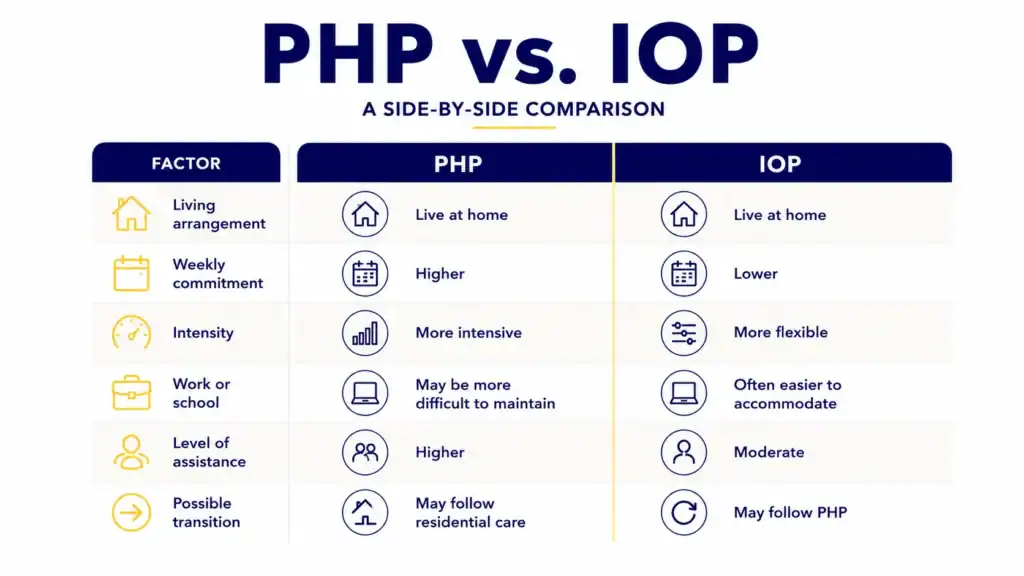
Neither option is automatically better than the other. A more intensive schedule does not necessarily mean better results, just as greater flexibility does not mean IOP is suitable for everyone. The decision can depend on symptom severity, substance use patterns, safety, responsibilities outside treatment, and how well someone is managing between appointments.
When Might a More Intensive Approach Be Needed?
Certain circumstances may require greater supervision before a person is ready for daytime or flexible programming. Severe withdrawal, medical complications, significant psychiatric symptoms, or difficulty remaining safe without 24-hour monitoring may require stabilization or residential care first.
For someone considering inpatient rehab in New Jersey, an individualized assessment can help identify potential risks and determine a suitable starting point. Convenience and daily responsibilities matter, but safety and current health needs should guide that decision.
What Can Influence a Recommendation?
Important considerations include the substance being used, frequency and duration of use, withdrawal potential, physical and emotional health, and history of relapse. Living circumstances, access to reliable family or social resources, and previous attempts at recovery can provide additional context. Taken together, these factors help professionals recommend an approach based on the person’s current situation rather than a single symptom or diagnosis.
What Happens as Recovery Needs Change?
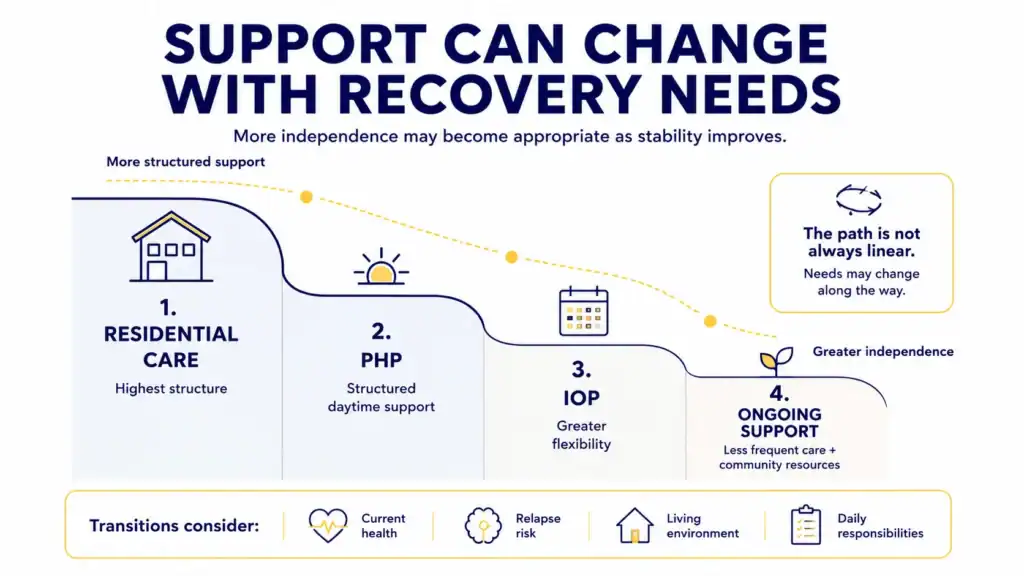
The amount of guidance a person needs can change as they make progress. Someone leaving a residential facility may move into PHP, followed by IOP and then less frequent appointments or community-based resources. This gradual shift is sometimes referred to as step-down care, with increased independence as stability improves.
Not everyone follows the same sequence. Some people begin at a different point, while others may need greater supervision if their circumstances change. When substance use and mental health needs overlap, what happens after a dual diagnosis may also influence the path forward.
Planning for Continued Progress
Transitions should account for current health, relapse risk, living circumstances, and the ability to manage daily responsibilities. A thoughtful plan can also include strategies for relapse prevention in recovery, helping maintain continuity as the frequency of professional involvement decreases.
How Does an Addiction Assessment Guide the Next Step?
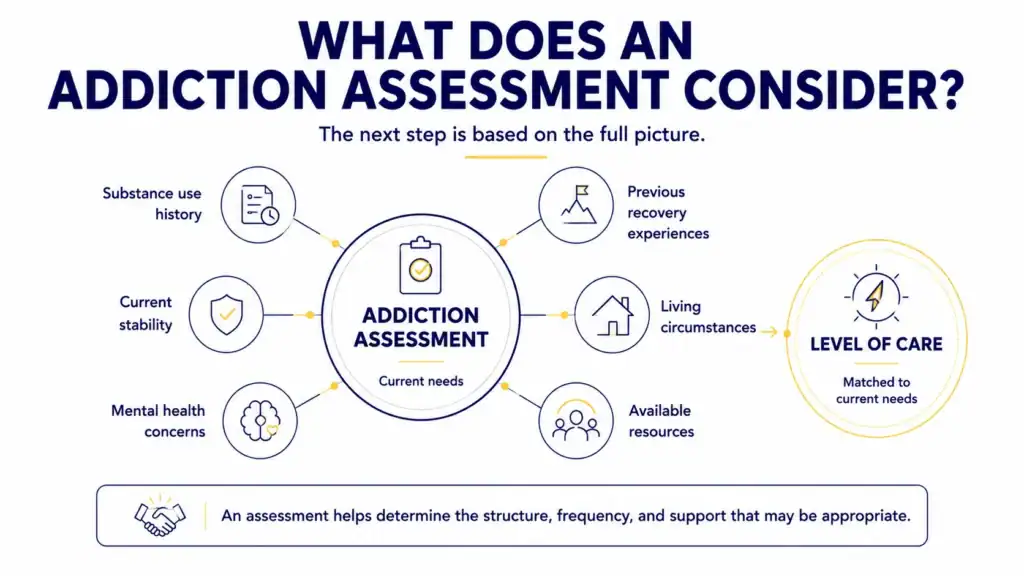
An addiction assessment considers more than scheduling preferences. Substance use history, current stability, mental health concerns, previous recovery experiences, living circumstances, and available resources can all help shape a recommendation.
The goal is to understand the person’s circumstances and identify an approach that matches their current needs. For some, that may include structured outpatient addiction treatment with a frequency and schedule suited to their situation.
What Happens After an Assessment?
After an assessment, the available options can be reviewed along with practical considerations such as scheduling, insurance coverage, and participation requirements. This also gives you a chance to ask questions, understand what the recommended approach involves, and decide on next steps.
Frequently Asked Questions
Is PHP the Same as Inpatient Rehab?
No. PHP generally allows participants to return to their residence at the end of the day, while inpatient rehab involves staying at a facility with 24-hour supervision. Differences in medical needs, safety, and daily functioning can influence which environment is recommended.
Which Is More Intensive, PHP or IOP?
PHP typically requires more hours of participation each week, while IOP has a lighter time commitment. Greater intensity may be useful when someone needs closer oversight or more frequent therapeutic involvement.
Can You Work While Attending Outpatient Rehab?
In some cases, yes. Certain schedules may allow people to maintain employment, attend school, or manage family responsibilities. Feasibility depends on attendance requirements, job demands, health considerations, and individual circumstances.
What Is Step-Down Care in Addiction Recovery?
Step-down care refers to gradually reducing the frequency or intensity of professional involvement as a person makes progress. For example, someone may leave a residential facility and later participate in daytime or flexible programming before moving toward less frequent appointments.
How Is the Right Level of Addiction Treatment Determined?
An assessment may consider withdrawal risk, drug or alcohol use, physical and emotional health, relapse history, living conditions, safety concerns, and day-to-day functioning. Looking at these factors together helps guide recommendations rather than relying on a single symptom or self-diagnosis.