
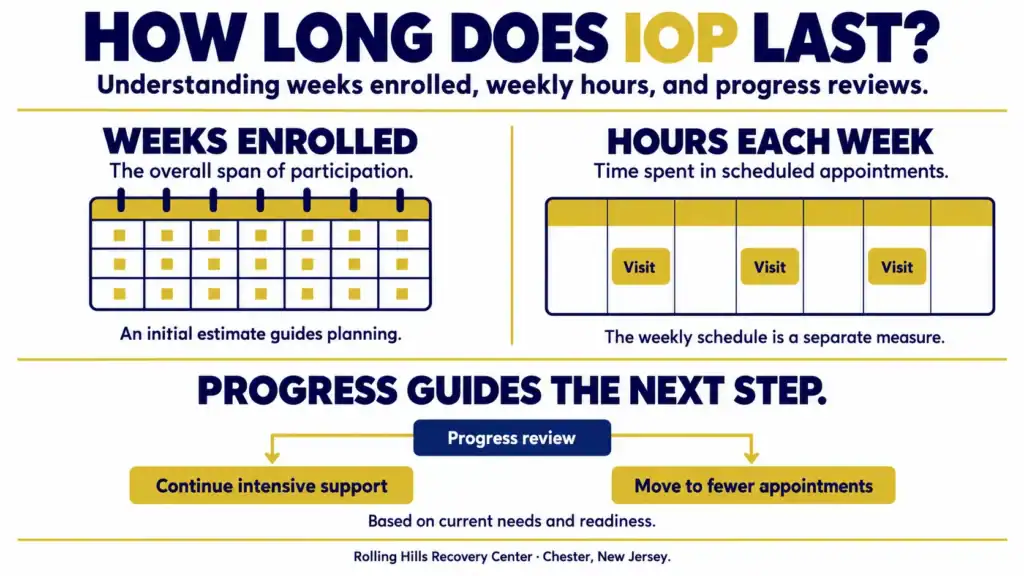
The length of an intensive outpatient program depends on the person’s starting needs, progress, and readiness for less frequent support. An initial estimate provides a number of weeks for planning, while the weekly schedule sets out the days attended and hours spent in scheduled appointments. These are separate measures: hours describe the weekly workload; weeks describe overall enrollment.
The expected completion date is reviewed as participation continues. Persistent cravings, emotional difficulties, or limited support at home influence whether additional weeks are needed. Fewer appointments follow a review of progress and available support, rather than the arrival of a preset date.
Understanding the Overall Time Frame
An Initial Estimate Is a Starting Point
An expected enrollment period helps with arranging work hours, transportation, childcare, and household responsibilities. Intensive outpatient participation ranges from a few weeks to several months, depending on the program and the person’s needs. That broad range is general guidance, not Rolling Hills Recovery Center’s stated schedule. At enrollment, the team establishes goals and an anticipated duration based on the information available. Later reviews assess whether that estimate still fits. Planning around an expected endpoint also means leaving room for adjustments when additional support is needed before moving to fewer appointments.
Weekly Hours Are a Separate Measure
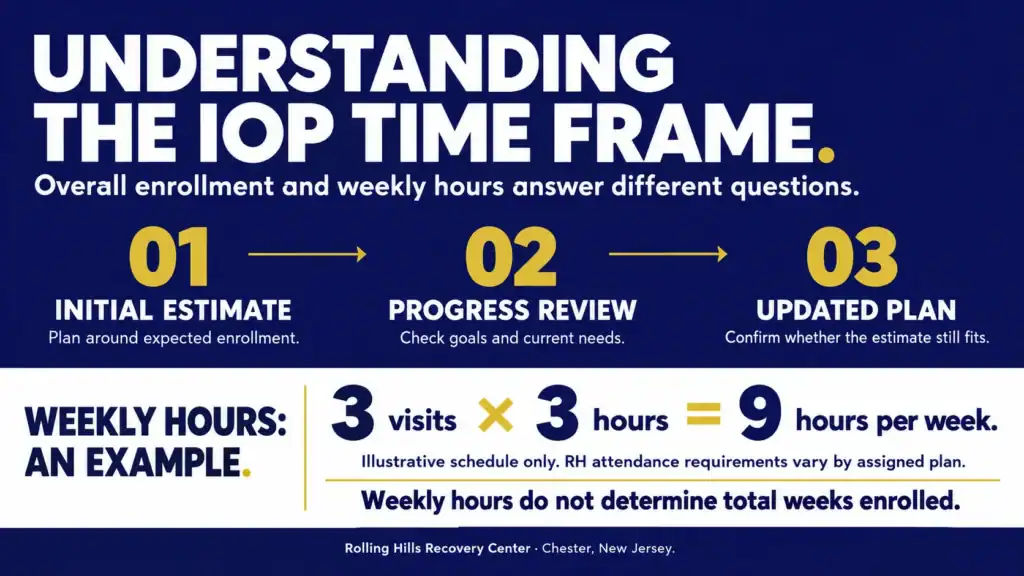
Weeks enrolled describe the overall span of participation. Weekly hours describe the amount of scheduled support within that span. Johns Hopkins Medicine’s guidance on intensive outpatient program duration and weekly hours describes nine or more hours of services each week. This describes the broader service category; RH’s current attendance requirements need separate confirmation. For illustration, three visits lasting three hours each equal nine weekly hours. That arithmetic does not establish how many weeks someone remains enrolled. Appointment frequency and overall duration answer different questions when preparing for participation and organizing responsibilities.
What a Week of Attendance Involves
Days Onsite and Time Between Visits
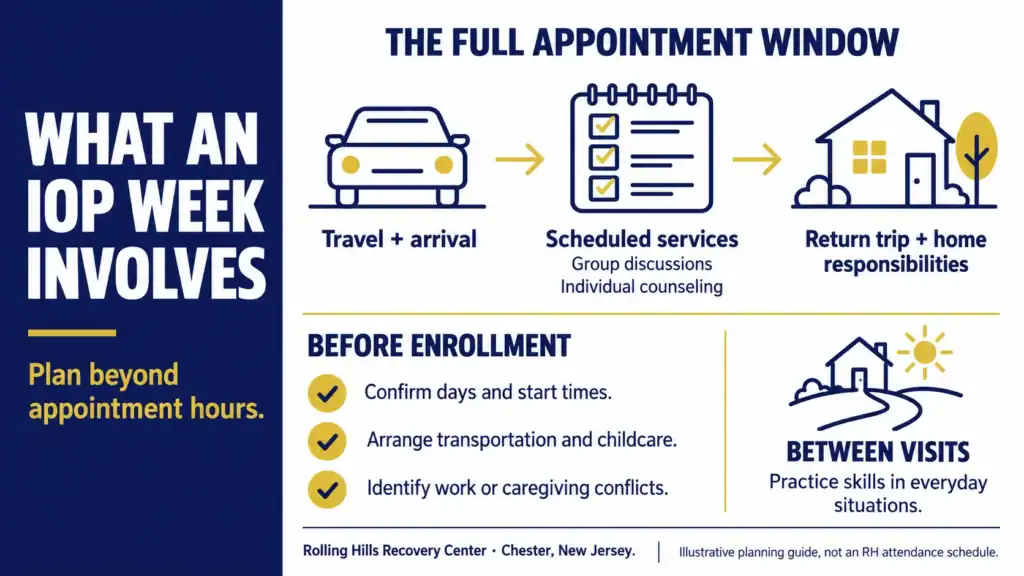
An IOP week includes scheduled appointments and time to apply new skills outside the facility. Group discussions, individual counseling, and other services occupy designated portions of the calendar. Participants return home afterward, where responsibilities and relationships remain part of daily life.
The days, start times, and length of each visit deserve confirmation before enrollment. Details about RH’s intensive outpatient program in New Jersey provide a starting point for discussing current attendance requirements with admissions. An example schedule illustrates the structure, but it should never substitute for the hours assigned at entry.
Making Room for Work and Family
Planning involves more than reserving the hours spent onsite. Travel, parking, childcare, meals, and the return trip also occupy time. A three-hour appointment requires a larger opening in the day once those practical details are included.
Before starting, participants benefit from identifying conflicts with work shifts, school pickup, or caregiving duties. Arranging dependable transportation and a backup contact reduces avoidable interruptions. Time between visits also provides opportunities to practice communication, respond to urges, and follow through on goals discussed with a counselor.
Why Some People Need More Weeks
Cravings and Substance Use Patterns
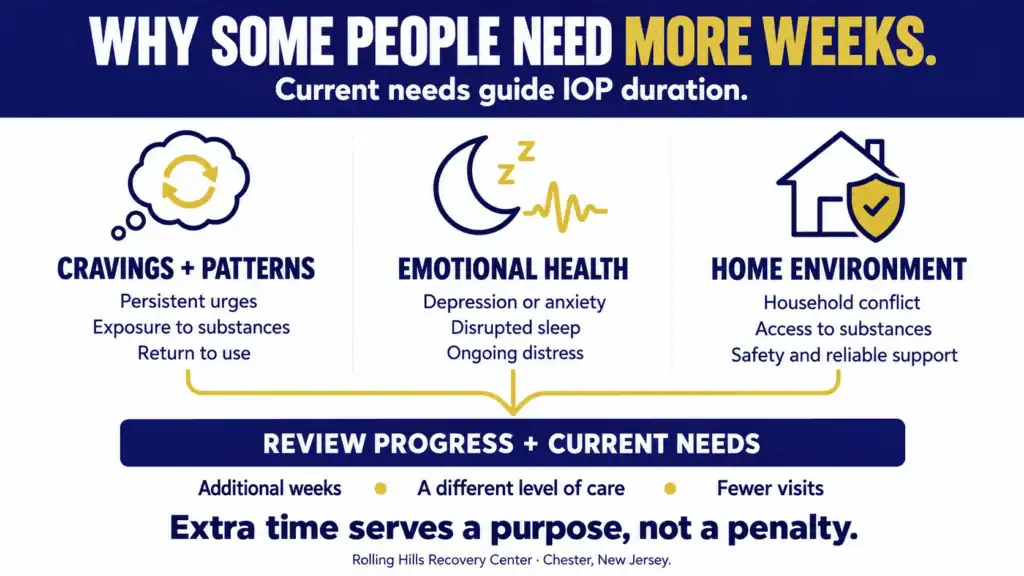
The ability to manage urges outside scheduled visits helps determine whether the current end date remains appropriate. Persistent cravings, repeated exposure to alcohol or drugs, or difficulty interrupting familiar habits signal a need to revisit that estimate.
A return to use prompts a closer look at what happened and what needs to change. Depending on the circumstances, the response involves additional weeks, a different approach, or a more supervised setting. Extra time serves a defined purpose rather than acting as a penalty.
Emotional Health and Stability at Home
Depression, anxiety, disrupted sleep, and unresolved distress affect concentration, decision-making, and engagement. When these concerns remain disruptive, reducing contact too quickly risks leaving important needs unaddressed.
Living conditions also influence the pace. Easy access to substances, conflict within the household, or an unsafe environment creates obstacles that deserve attention before attendance decreases. The question is whether the person has enough stability and reliable assistance to manage with less frequent professional contact. These factors matter alongside changes in substance use, rather than functioning as separate concerns.
Progress Reviews and Changes in Support
Regular reviews bring these observations together. The team considers recent behavior, emotional functioning, safety, and the person’s own account of what remains difficult. The Agency for Healthcare Research and Quality describes monitoring progress and adjusting care plans as part of coordinated behavioral health care.
That review does not always result in a longer IOP stay. Some people need a different service intensity, while others are ready for fewer visits. The decision follows the evidence available at that point.
How Readiness for Fewer Appointments Is Evaluated
Putting Skills Into Practice
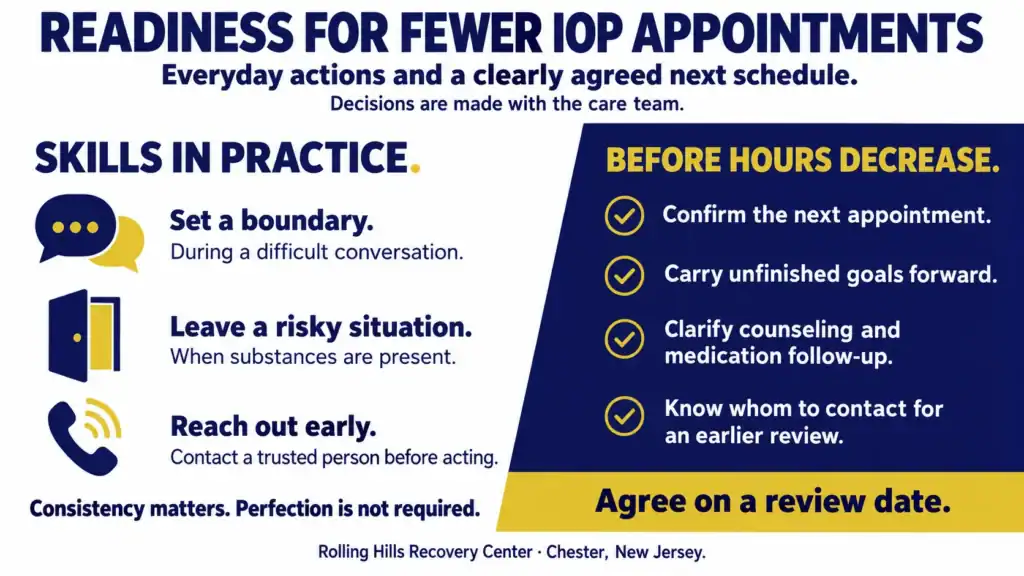
Readiness shows through specific actions: setting a boundary during a difficult conversation, leaving a situation where substances are present, or contacting a trusted person before making an impulsive decision. These examples give the counselor and participant something concrete to discuss.
The review looks beyond knowing what to do. It considers whether those responses are becoming consistent without immediate direction from staff. Describing what worked, what fell short, and what needs more practice provides a fuller picture than attendance records alone. Progress does not require flawless performance; honest reflection helps identify the next realistic goal.
Agreeing on the Next Schedule
Before attendance decreases, the participant and team establish clear expectations for the change. That includes the appointments still required, goals carried forward, and a date to review how the new arrangement is working.
For someone receiving care for co-occurring mental health and substance use concerns, coordination also means confirming who remains responsible for counseling and any prescribed medication. Reducing IOP hours should not leave those responsibilities unclear.
The participant should leave that discussion knowing the next appointment date, the appropriate contact for questions, and the signs that call for an earlier review.
What Happens After the Intensive Phase?
Moving to Less Frequent Visits
After IOP, some participants move into ongoing outpatient support, with fewer weekly hours devoted to professional care. Others continue with an established therapist or another service suited to their circumstances.
This phase gives everyday experiences a larger role in counseling. Conversations draw on situations encountered at work, at home, and in relationships. The focus shifts toward maintaining useful habits and addressing difficulties as they arise, with professional contact continuing at the agreed frequency.
Keeping Connections in Place
A dependable network extends beyond appointments. Peer groups, trusted friends, family members, and community activities provide different forms of connection. Participation should reflect personal preferences and offer space for honest conversation without pressure or judgment.
Regular meals, sleep, movement, and meaningful activities also give the week structure once onsite hours decrease. The aim is to build a life with enough connection and purpose to sustain the changes already underway. Leaving the intensive phase marks a change in how help is organized, rather than an expectation to handle everything alone.
Frequently Asked Questions
Does Insurance Approval Determine the Completion Date?
Insurance authorization identifies the services approved for coverage. It does not establish readiness to finish IOP. The recommended duration reflects the person’s needs and response to care. Before an authorization period ends, the provider and insurer review any request for additional covered visits.
Does a Missed Appointment Add Another Week?
A missed visit does not automatically add a week. The effect depends on the program’s attendance policy, the services missed, and outstanding goals. Contacting staff promptly helps clarify whether a makeup appointment or another schedule adjustment is required.
Is the Time Commitment Different for Alcohol and Other Substances?
The substance alone does not determine enrollment length. Frequency of use, physical health, emotional difficulties, and living circumstances all inform the recommendation. Two people seeking help for the same substance do not necessarily receive identical schedules or finish at the same point.
Does a Return to Use Mean Starting Over?
A return to use does not erase skills already learned. It prompts a review of immediate safety, the circumstances involved, and the appropriate response. The next step depends on that review rather than an automatic restart of the original schedule.