
Partial hospitalization programs (PHPs) typically involve scheduled treatment on multiple days each week, but there is no single enrollment period that applies to everyone. The amount of time spent receiving care depends on more than the number of appointments attended.
Three separate measures help explain the time commitment: how many hours someone spends at the center on a given day, how frequently they attend throughout the week, and the overall period they remain enrolled.
A program with substantial weekly attendance does not necessarily last longer than one with fewer scheduled visits. Understanding these distinctions helps clarify what PHP participation may involve.
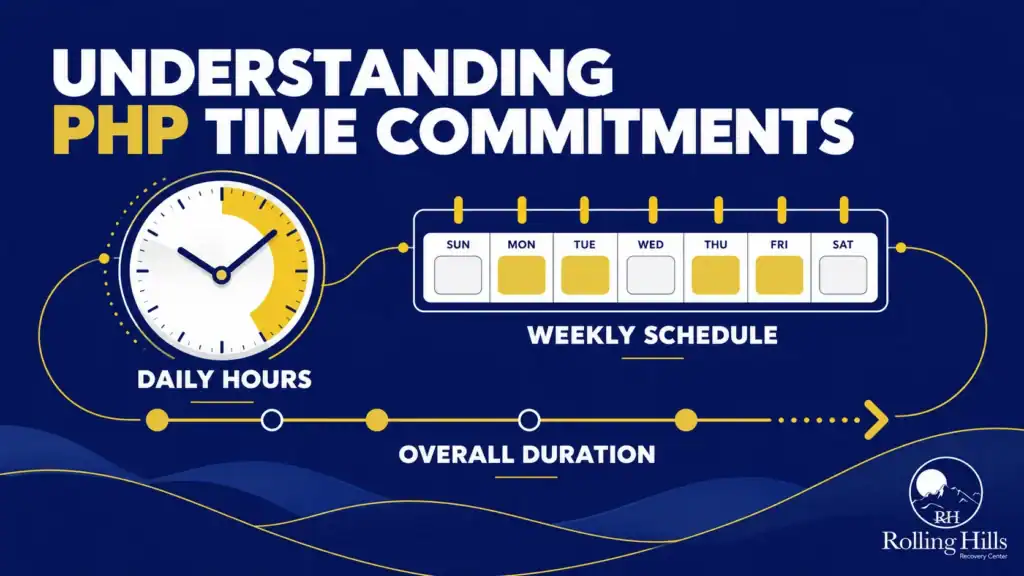
How Many Hours a Day Does PHP Involve?
Partial hospitalization typically requires a substantial portion of the day rather than a single appointment. Participants may spend several hours at a treatment location, with different services taking place during that period.
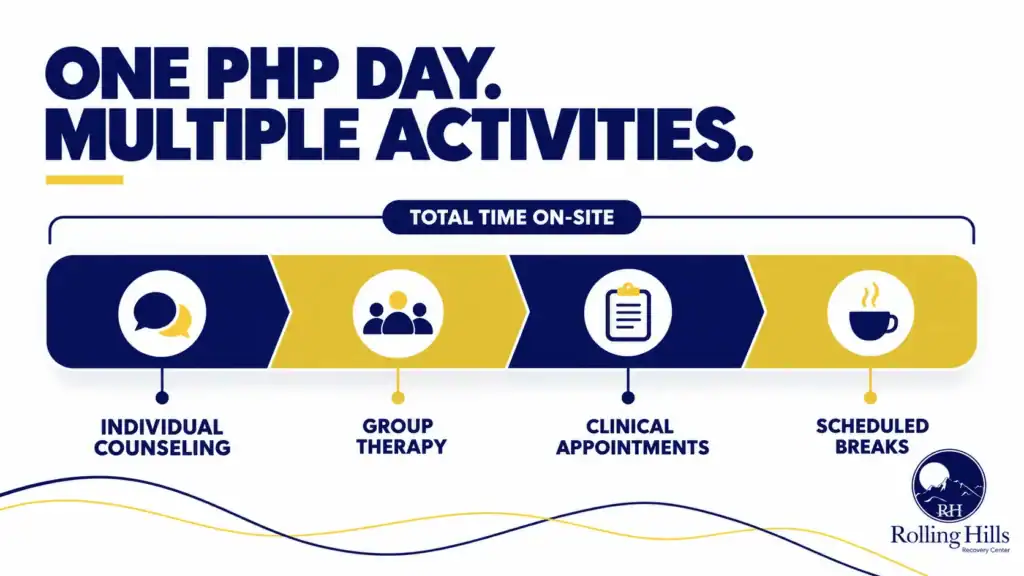
The total time on-site should not be confused with the length of an individual counseling appointment or clinical meeting. A partial hospitalization program may organize several components within one visit, although exact start times, breaks, and departure arrangements differ between providers.
What Might a PHP Treatment Day Include?
Depending on the center, the day may include individual counseling, group therapy, clinical appointments, and scheduled breaks. These components do not necessarily occur in the same order or combination for every participant.
Someone considering PHP can clarify when they are expected to arrive, when services conclude, and how much time is spent in different activities. This provides a practical understanding of the daily commitment without assuming a universal timetable.
How Many Days Per Week Is PHP Scheduled?
Partial hospitalization commonly involves participation on several days each week rather than occasional, standalone appointments. This recurring pattern is one characteristic of PHP, although the specific frequency is not identical across providers.
Unlike services arranged individually as needed, PHP generally follows a recurring timetable. Participants may receive designated weekdays for attending, rather than arranging each visit separately.
Understanding Weekly Attendance Expectations
The particular weekdays involved can affect transportation planning and other obligations. Holidays, temporary closures, or changes to planned visits may also influence the calendar. Knowing how these situations are handled provides a more complete understanding of what regular participation involves.
How Many Weeks Does Partial Hospitalization Last?
The overall period of PHP enrollment is not necessarily set at the outset. Clinical recommendations help establish an initial expectation, but the time someone remains in care may reflect how they respond to services and what is identified through ongoing review.
Rather than treating a projected number of weeks as a fixed course, clinicians can consider whether continued participation remains suitable. This distinction matters because an estimated timeline describes what is anticipated, not a guaranteed endpoint.
Is There a Fixed Completion Date?
A possible finishing date may be discussed when someone begins PHP. However, that estimate does not guarantee when participation will conclude. The date may change as treatment continues.
Can the Length of Participation Change?
Yes. The original plan may be reconsidered when new clinical information becomes available. That could mean continuing beyond the initial estimate or concluding sooner when a change is clinically supported. Such decisions should reflect professional judgment rather than an automatic countdown.
What Can Affect the Time Someone Spends in PHP?
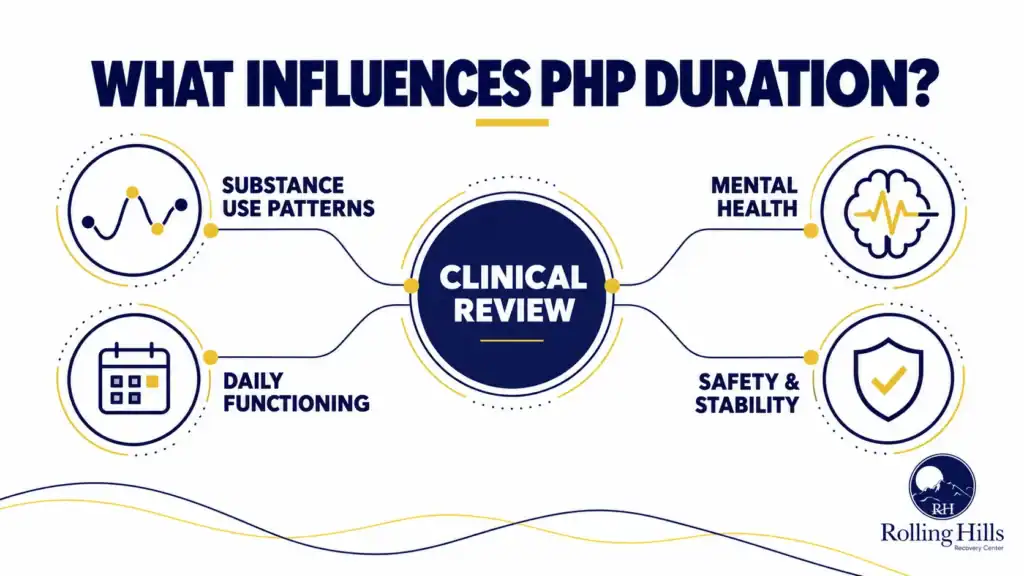
Several factors can influence whether someone continues participating in partial hospitalization. Substance use disorder treatment planning may consider substance use patterns, co-occurring mental health concerns, everyday functioning, and safety. Clinicians examine these circumstances together rather than relying on a single measure.
Symptoms and Response to Care
Changes in emotional well-being, substance use, and the ability to manage ordinary responsibilities can offer insight into how someone is responding to treatment. Improvement in one area does not necessarily mean that all concerns have been resolved. Similarly, ongoing difficulties do not automatically establish that PHP must continue.
Clinical Circumstances That May Change
New concerns can emerge during participation, including worsening mental health symptoms or difficulties maintaining stability outside treatment hours. Conversely, improvements in functioning may support consideration of a different arrangement.
These developments can influence recommendations about continued participation, but no single change establishes a specific end date. No single development determines whether PHP should continue.
What Happens After PHP Ends?
Completing partial hospitalization marks the end of one phase of treatment, but it does not always mean that professional support stops entirely. Some individuals continue attending counseling appointments, receive follow-up assistance, or use community resources after leaving PHP.
The services that follow may involve less frequent contact with healthcare professionals. Others may need a different form of professional assistance before reducing the frequency of their appointments. There is no single pathway that applies to every person.
Continuing Care Without Daily PHP Attendance
One option is intensive outpatient treatment, which offers recurring therapeutic appointments while allowing individuals to live at home.
IOP is not a mandatory next stage after PHP. Other possibilities may include standard outpatient counseling or ongoing contact with existing healthcare providers. The focus is on maintaining access to relevant support after the more demanding attendance pattern of partial hospitalization ends.

How Is the Treatment Plan Reviewed?
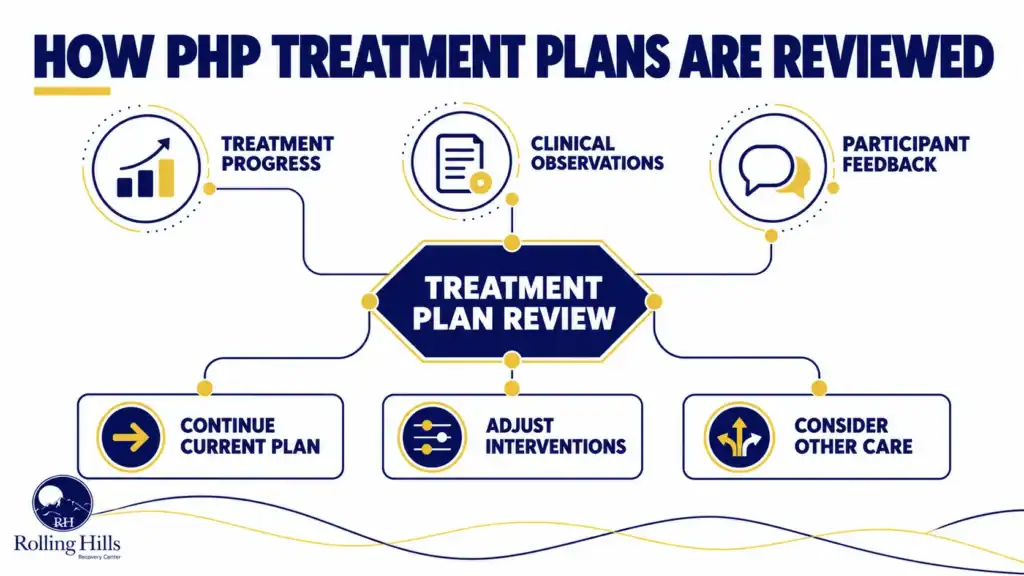
During PHP, clinicians may revisit the treatment plan to examine whether its goals are being addressed and whether the current services remain suitable. These discussions can draw on information from appointments, observations by the care team, and the participant’s own account of their experience.
Guidance on substance use treatment planning emphasizes reassessing established goals and revising plans when circumstances change. The timing and format of these discussions can differ among providers.
Deciding Whether the Current Plan Should Continue
A review can lead to several recommendations: maintaining the existing arrangement, adjusting particular interventions, or considering another form of care. The decision is not based solely on completing a predetermined number of visits.
Participants may also discuss concerns, ask questions, and better understand the reasoning behind proposed changes.
Understanding the PHP Time Commitment Before Admission
Before entering partial hospitalization, it helps to understand more than the anticipated enrollment period. The hours spent at the facility, frequency of visits, and expectations for completing the program are separate details that shape the experience.
Prospective participants can also ask how changes to the original plan are communicated and whom to contact with practical questions. Reviewing the admissions process can provide a starting point for understanding enrollment procedures.
These details can help prospective participants understand what enrollment involves without assuming every provider follows the same approach.
Frequently Asked Questions
Is PHP an All-Day Program?
PHP often occupies a substantial part of the day, but participants generally return home afterward rather than stay overnight. Exact start and finish times differ between facilities, so an all-day commitment should not be assumed without checking the provider's timetable.
Does PHP Run Every Weekday?
Not always. Some facilities offer PHP five days a week, while others follow different calendars. The expected attendance pattern should be confirmed before enrollment, particularly when arranging transportation, childcare, or other responsibilities that could affect availability.
Can PHP End Earlier Than Expected?
Yes. An initial completion estimate may change if the clinical team determines that a different course of care is suitable. Finishing earlier is not automatic, however, and should be discussed with the professionals overseeing treatment.
Is PHP Longer Than IOP?
Not necessarily. PHP usually involves more treatment hours within a typical week, but that does not establish which program lasts longer overall. Someone may spend fewer weeks in one setting and more in another, depending on the recommended course.
Does Insurance Affect How Long PHP Lasts?
Insurance can influence payment for PHP and whether additional authorization is necessary. Coverage decisions do not always match clinical recommendations, so it is important to distinguish what an insurer will pay for from what healthcare professionals consider medically appropriate.